By Kris Hazard
If you're new to Kailua-Kona or considering moving here, it's worth walking through the historic district. The area's architectural roots genuinely change how people see the newer properties we visit afterward. Kona's built environment spans everything from nineteenth-century lava rock landmarks to today's indoor-outdoor luxury homes designed around ocean views.
This guide covers the architectural details I bring up most often with clients getting to know the area.
Key Takeaways
- Historic landmarks: Lava rock and coral construction define Kona's earliest surviving buildings.
- Missionary influence: New England-style architecture arrived alongside Kona's first Christian missionaries.
- Plantation character: Later buildings introduced a distinct plantation-era aesthetic along Ali'i Drive.
- Modern design: Today's homes emphasize indoor-outdoor living suited to the island's climate.
Historic Landmarks Built From Lava Rock and Coral
Kona's oldest surviving structures rely on lava rock and coral mortar, materials sourced directly from the surrounding landscape.
- Hulihe'e Palace: Built in 1838 for Governor John Adams Kuakini, this residence used lava rock, coral, and koa timbers.
- Mokuaikaua Church: Completed in 1837, this stone church stands as Hawaii's oldest Christian church building.
- Shared construction methods: Both landmarks were built under Kuakini's direction using similar exposed-stone techniques.
These buildings show how early Kona architecture drew directly from locally available materials.
Missionary-Era and Victorian Influences
Kona's early Western architecture arrived alongside missionaries and later evolved to reflect Victorian tastes among Hawaiian royalty.
- New England-style detailing: Mokuaikaua Church's steeple and clapboard sections reflect the missionaries' New England origins.
- Victorian-era additions: Hulihe'e Palace gained crown moldings, gold leaf details, and crystal chandeliers during later remodels.
- Blended architectural identity: Both buildings combine Western construction techniques with distinctly Hawaiian materials.
These two landmarks remain the clearest surviving examples of that architectural transition in Kona.
Plantation-Style Architecture Along Ali'i Drive
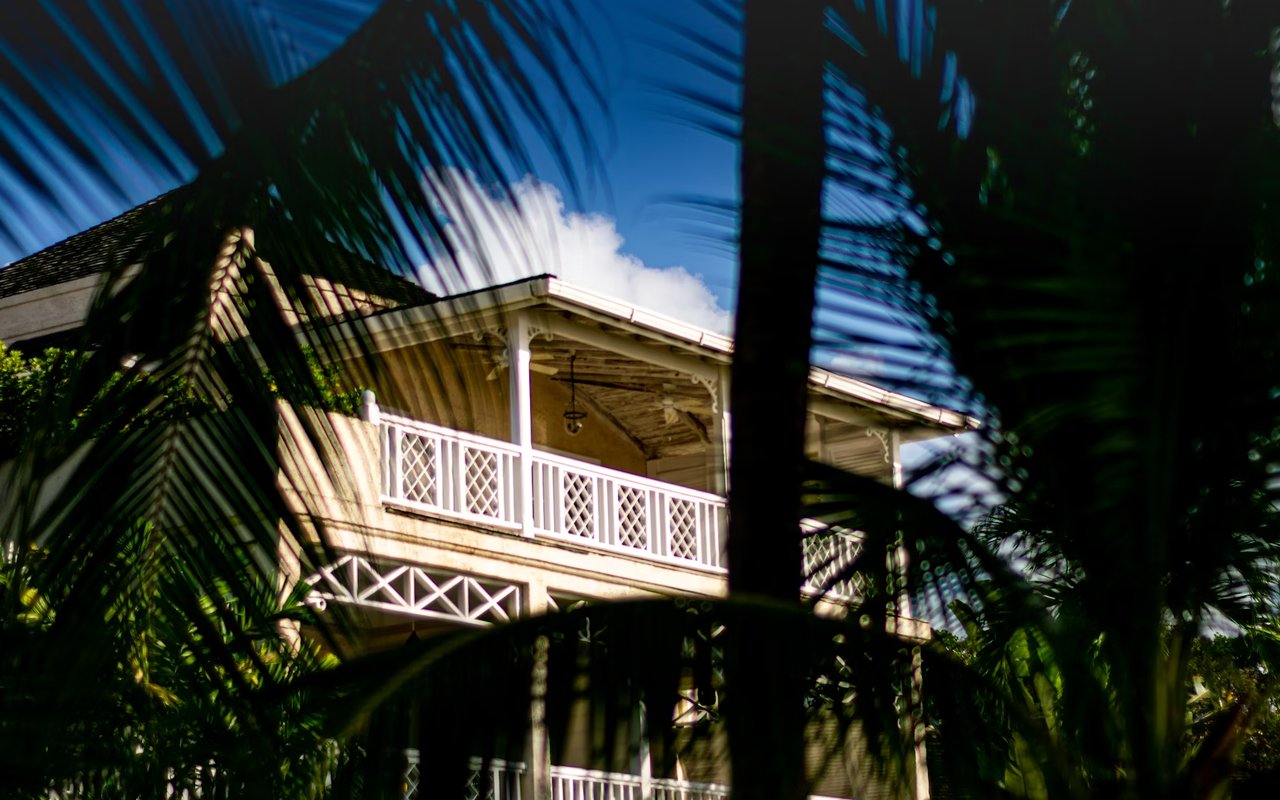
Kona's plantation era introduced a distinct architectural style that still shapes several buildings along the waterfront today.
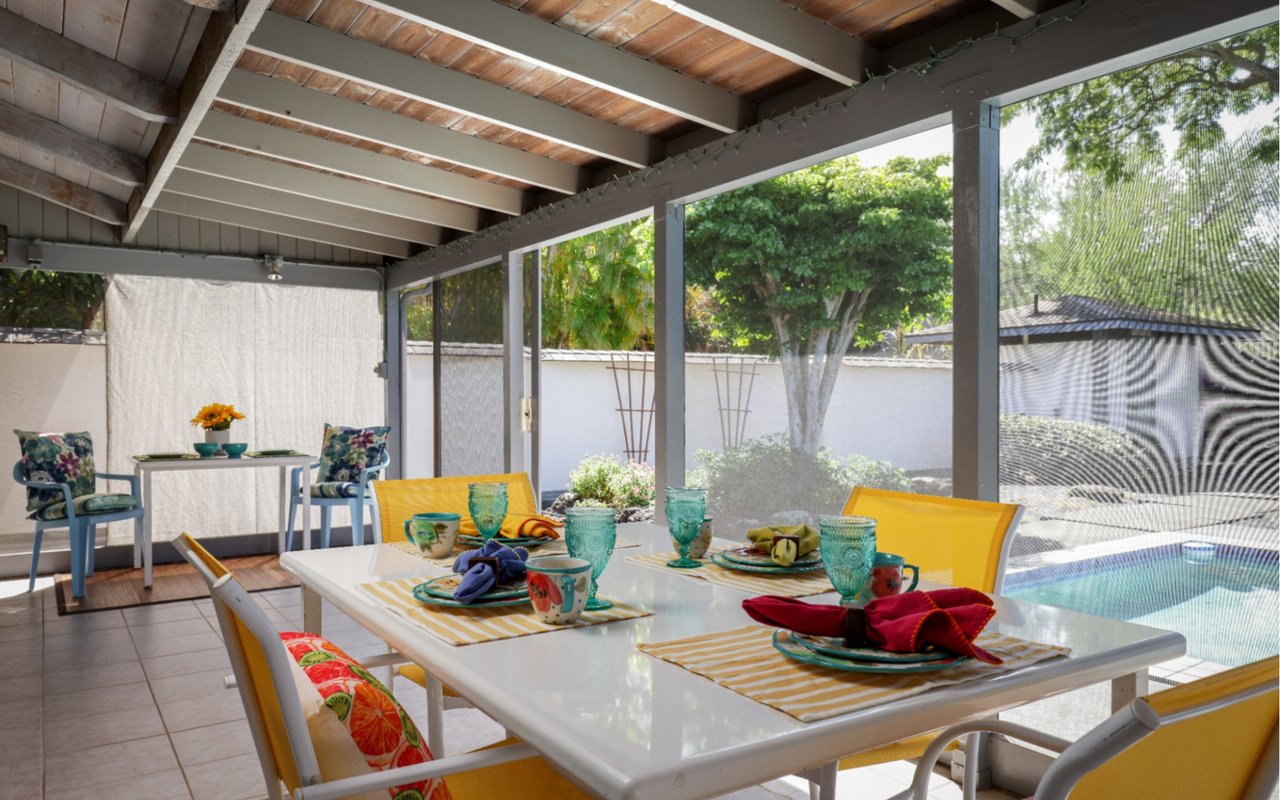
- Wide, shaded lanai spaces: Deep porches provided relief from sun and rain throughout the plantation era.
- Simple, functional layouts: Plantation buildings prioritized practicality over ornamentation.
- Distinctive color palettes: Contrasting trim colors remain a recognizable feature of buildings from this period.
Walking along Ali'i Drive reveals how many of these plantation-era details have been preserved rather than replaced.
Traditional Hawaiian Building Elements
Beyond Western-influenced landmarks, traditional Hawaiian building elements continue to influence architecture throughout the Kona area.
- Hale-style structures: Traditional grass and wood hale represent building methods that predate Western contact.
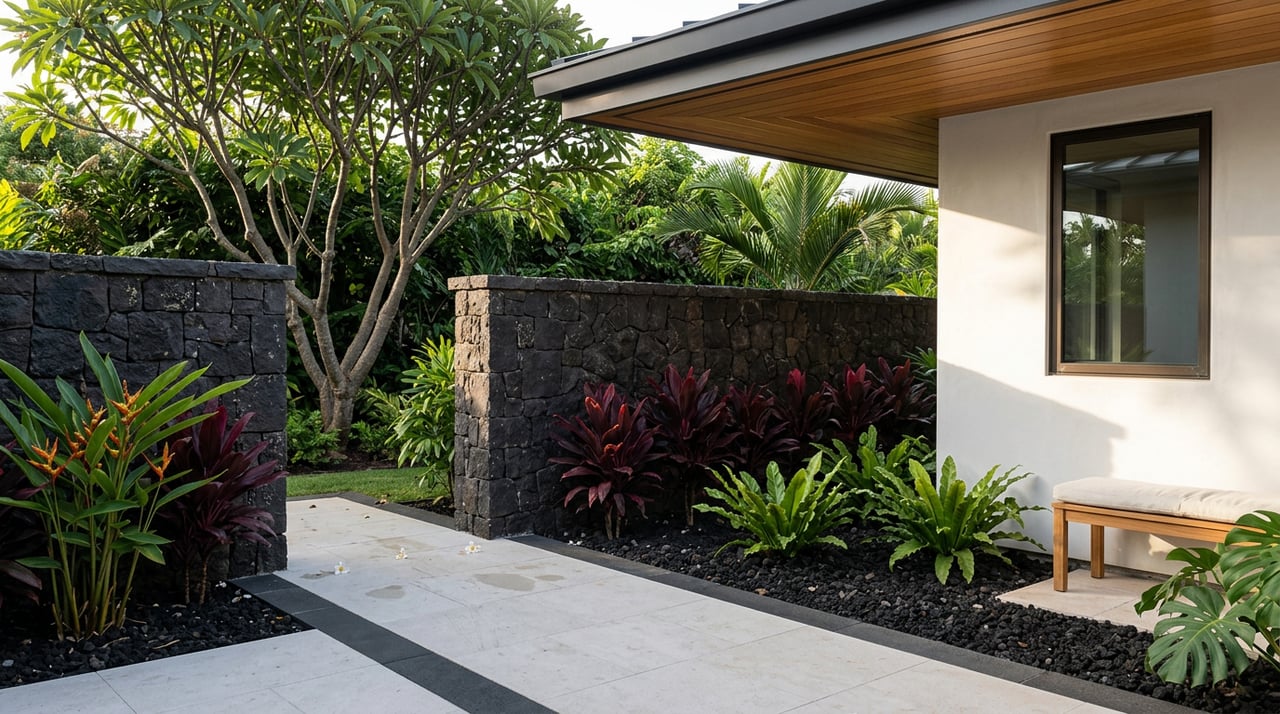
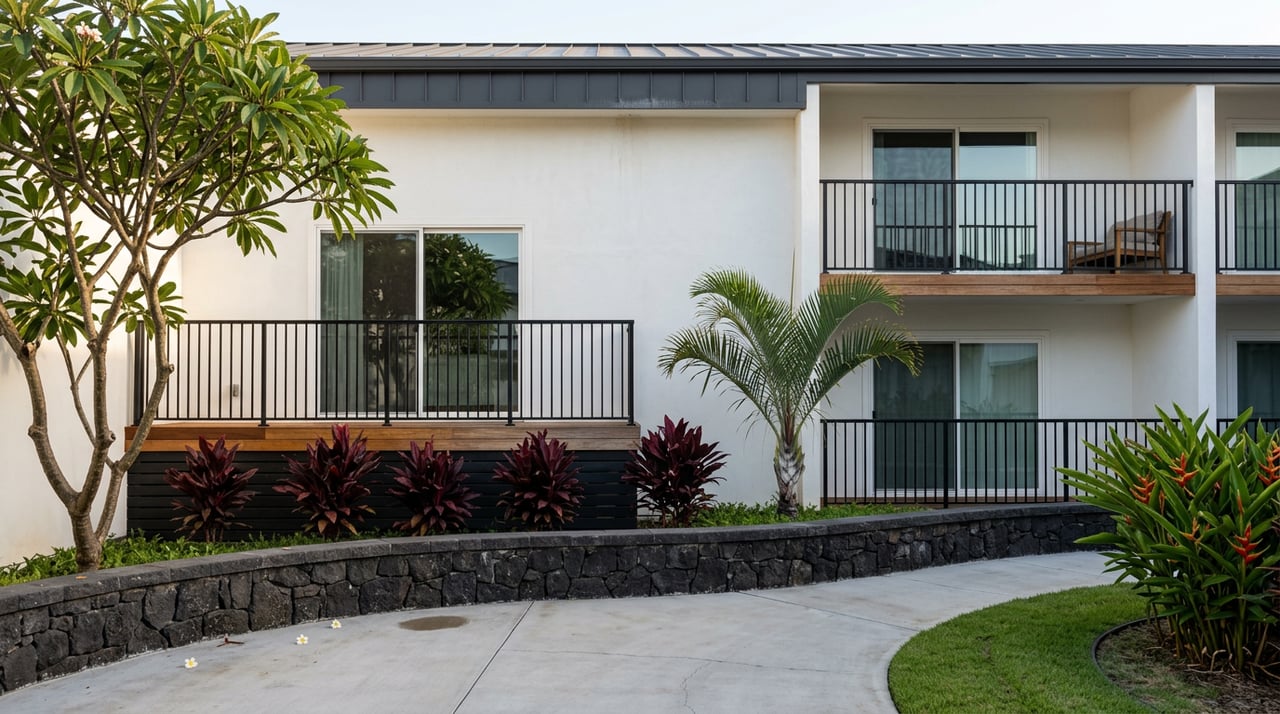
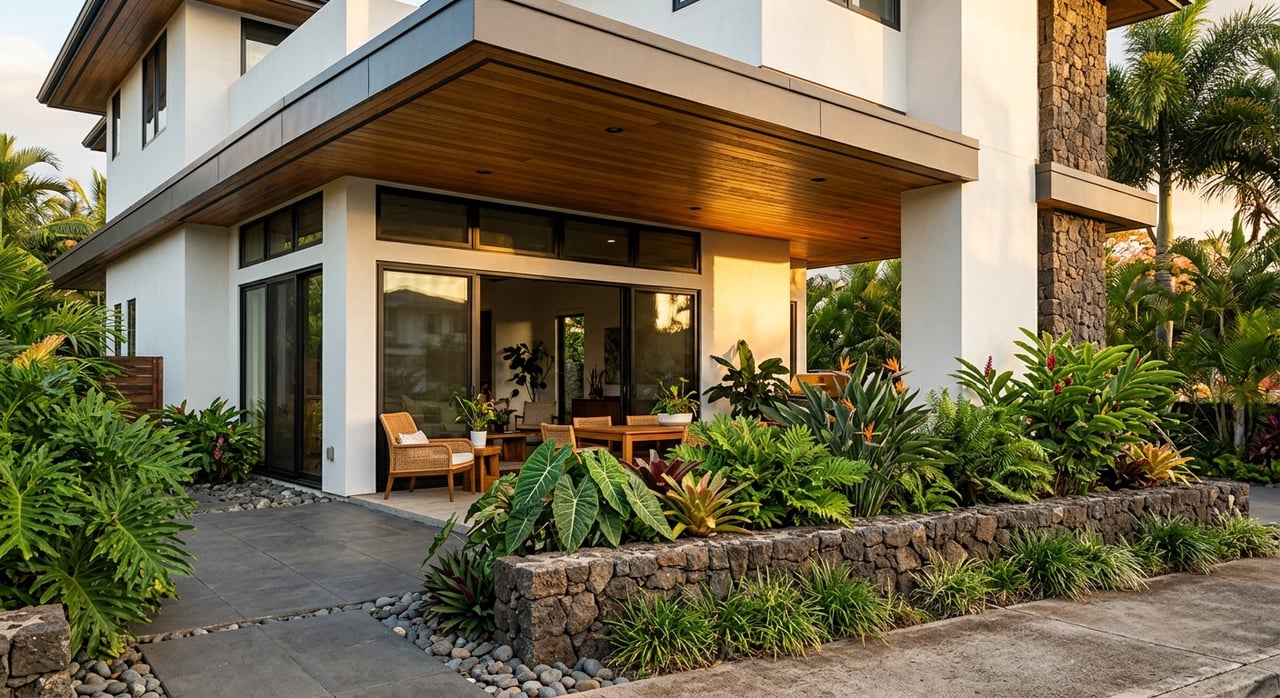
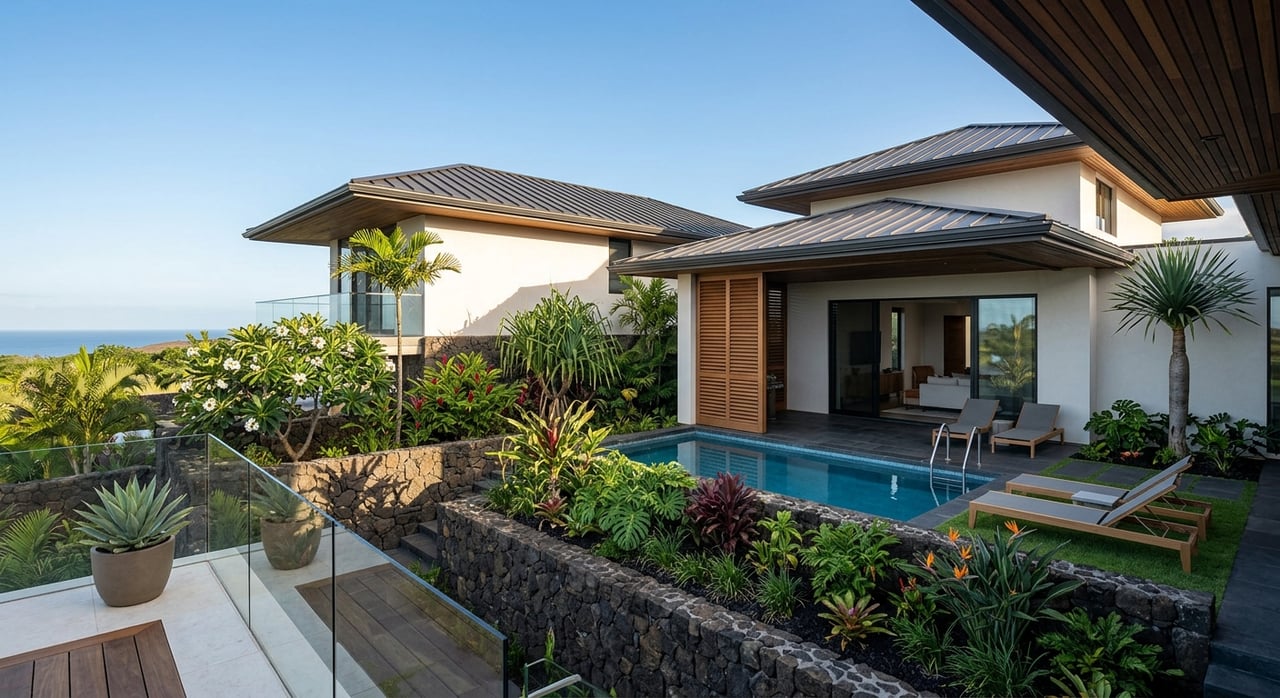
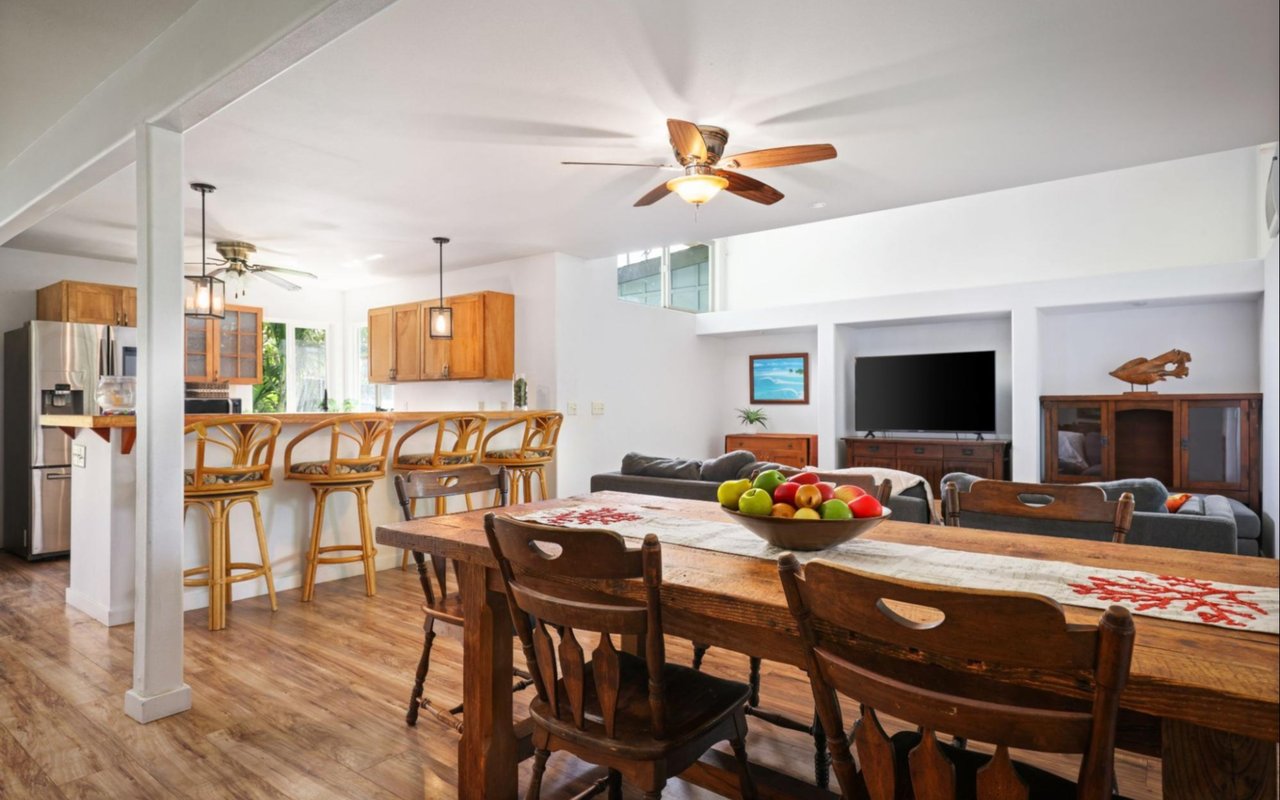
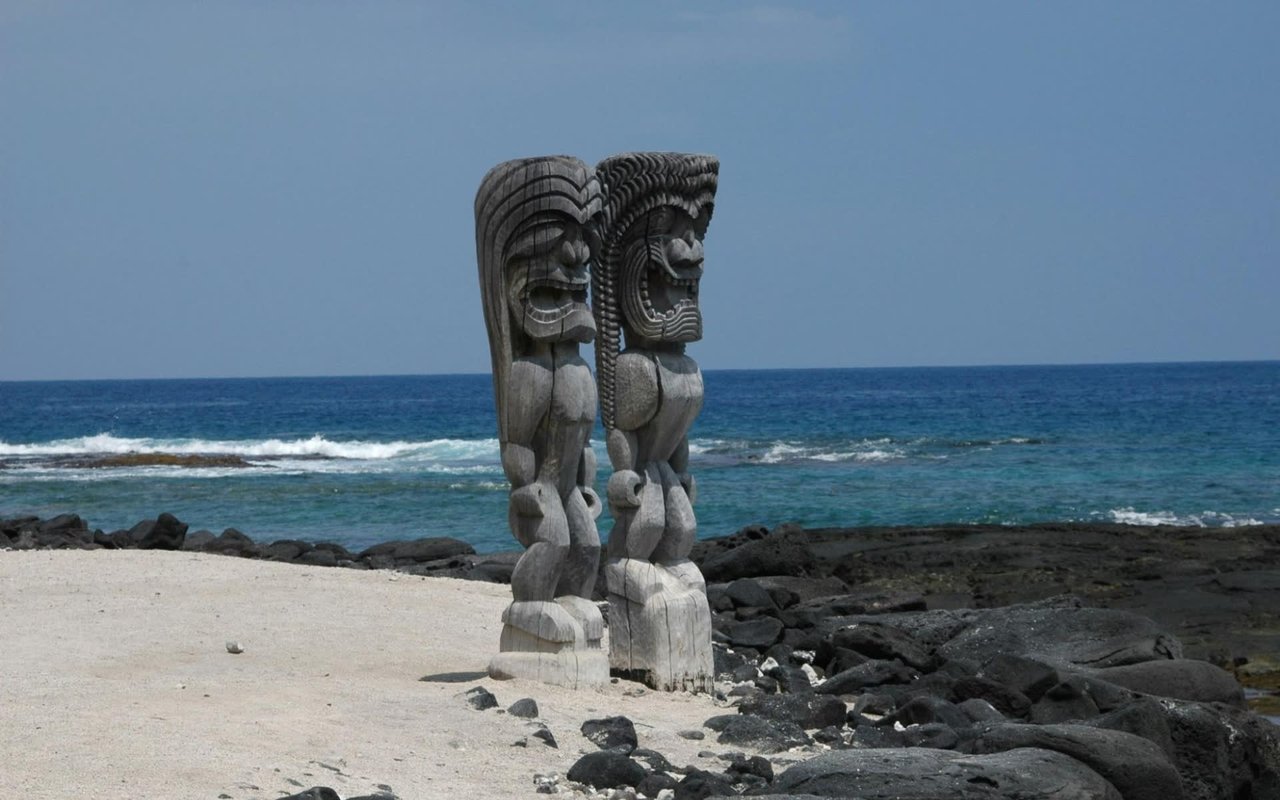
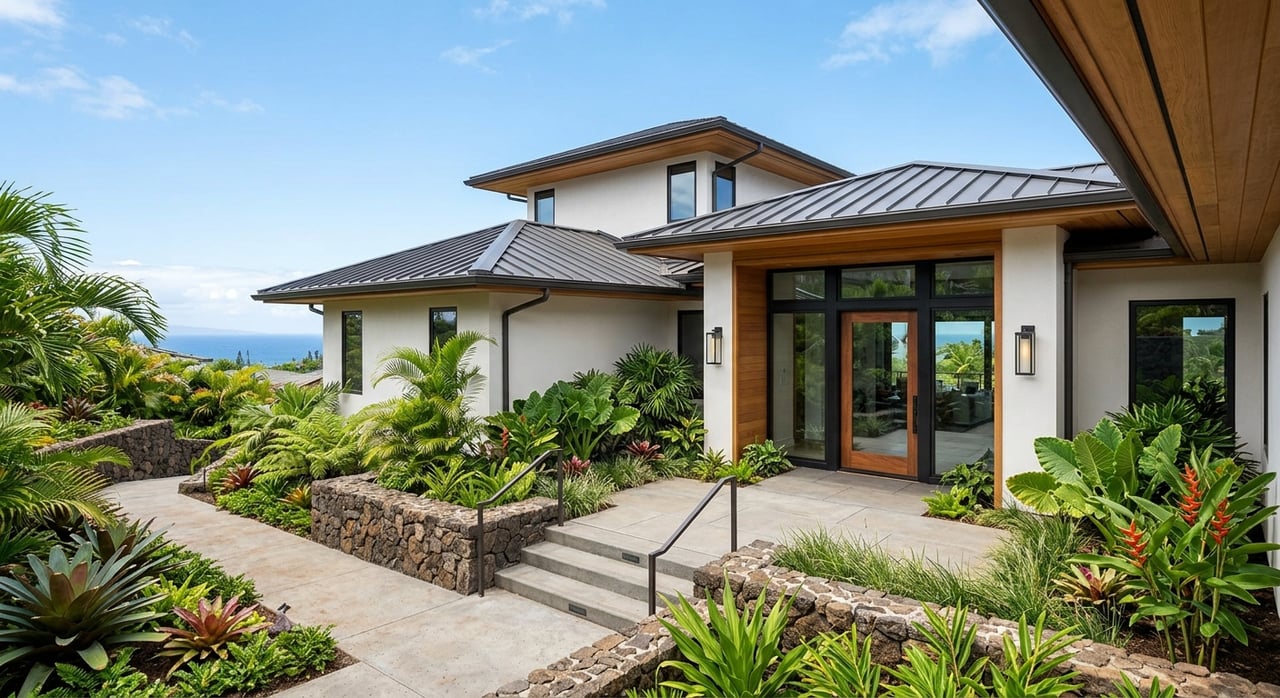
- Natural material use: Ohia wood, koa, and lava rock remain common materials across both historic and modern construction.
- Open, climate-responsive layouts: Traditional Hawaiian structures prioritized airflow and shade well before modern design trends caught up.
These elements continue to influence how architects and builders approach new construction throughout the region.
Modern Indoor-Outdoor Luxury Homes
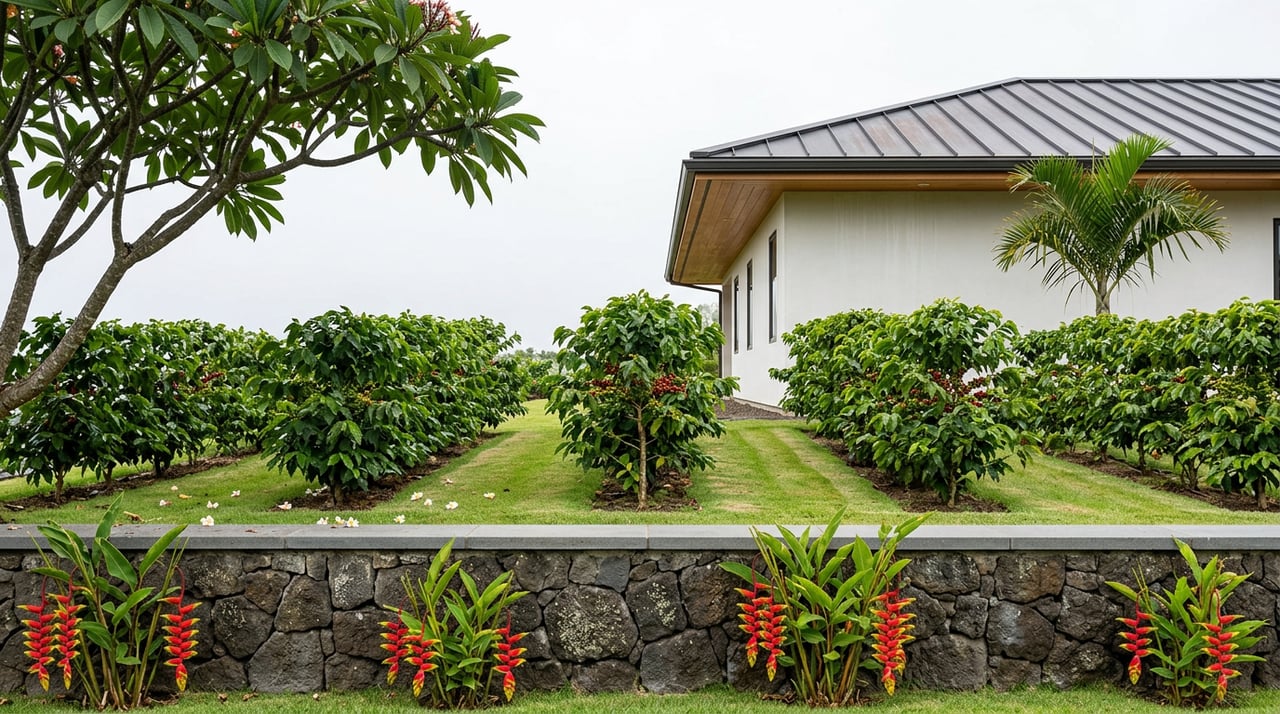
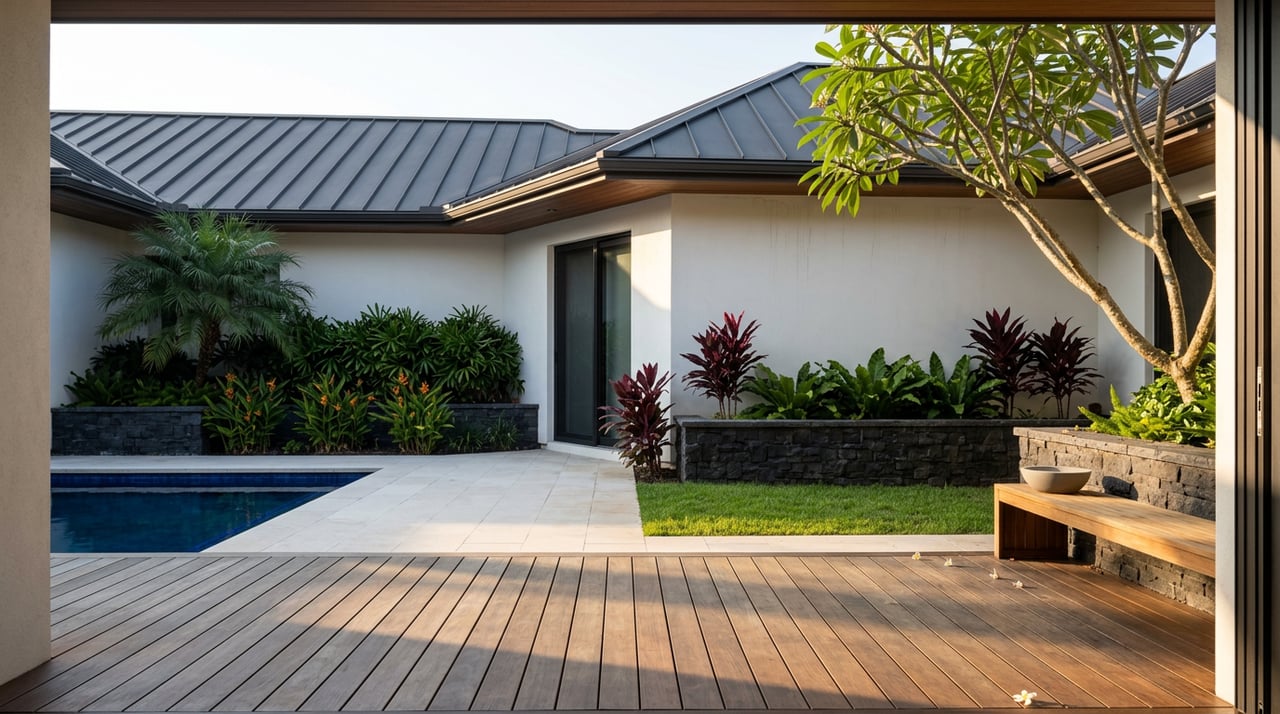
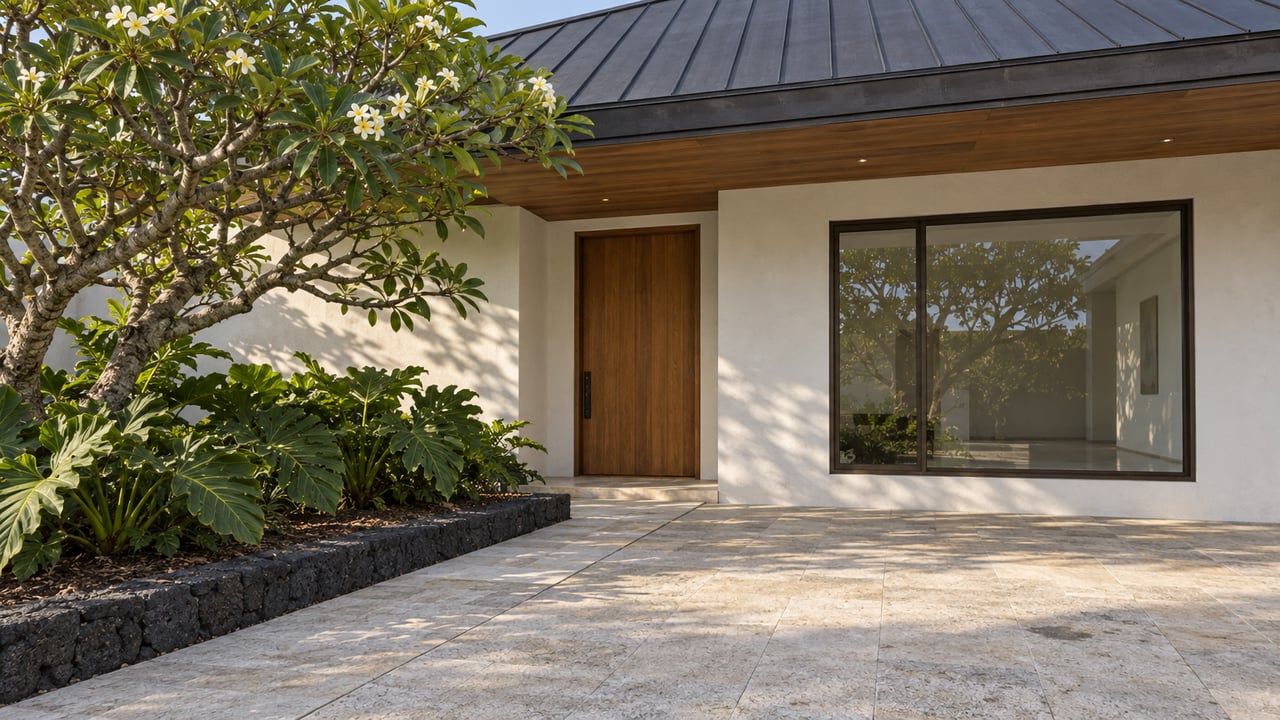
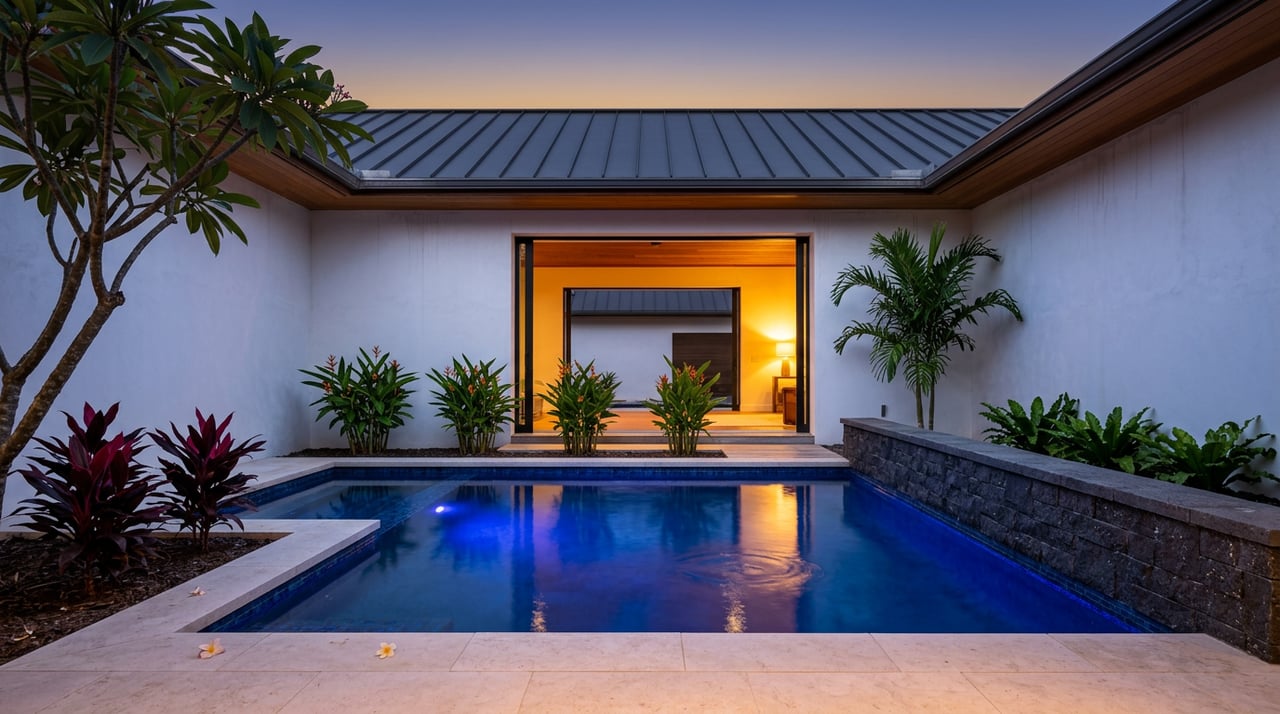
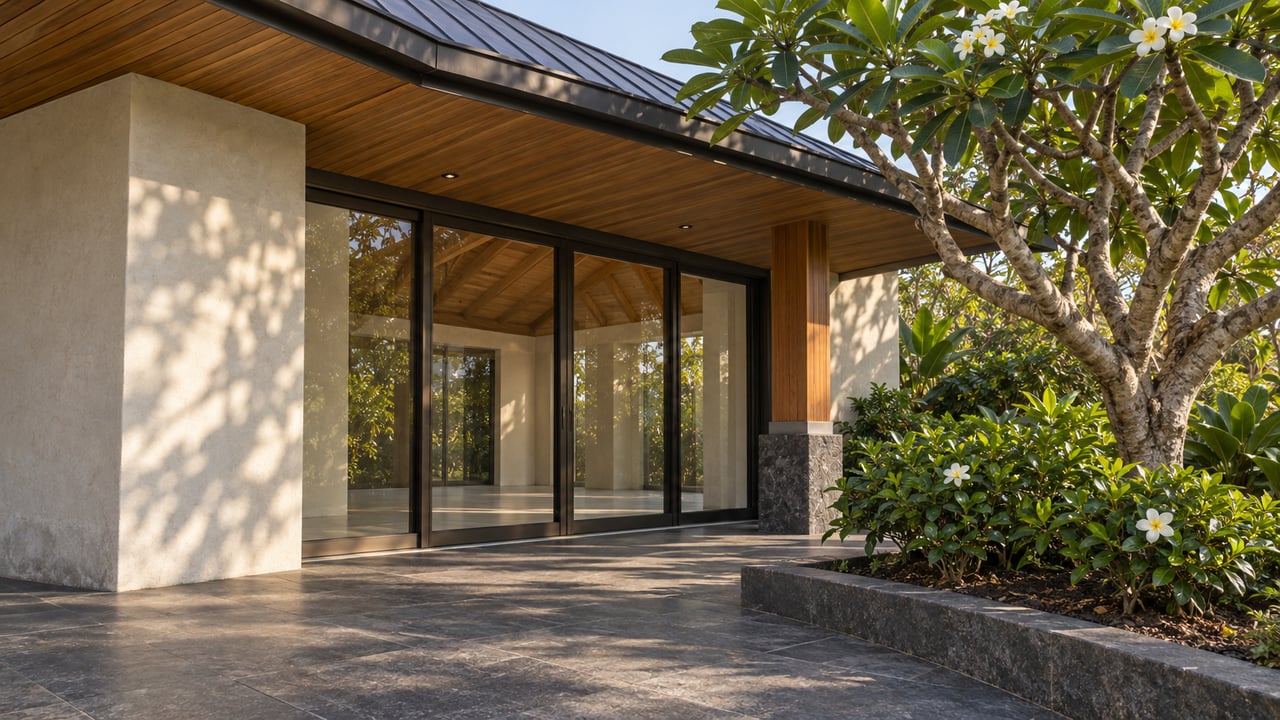
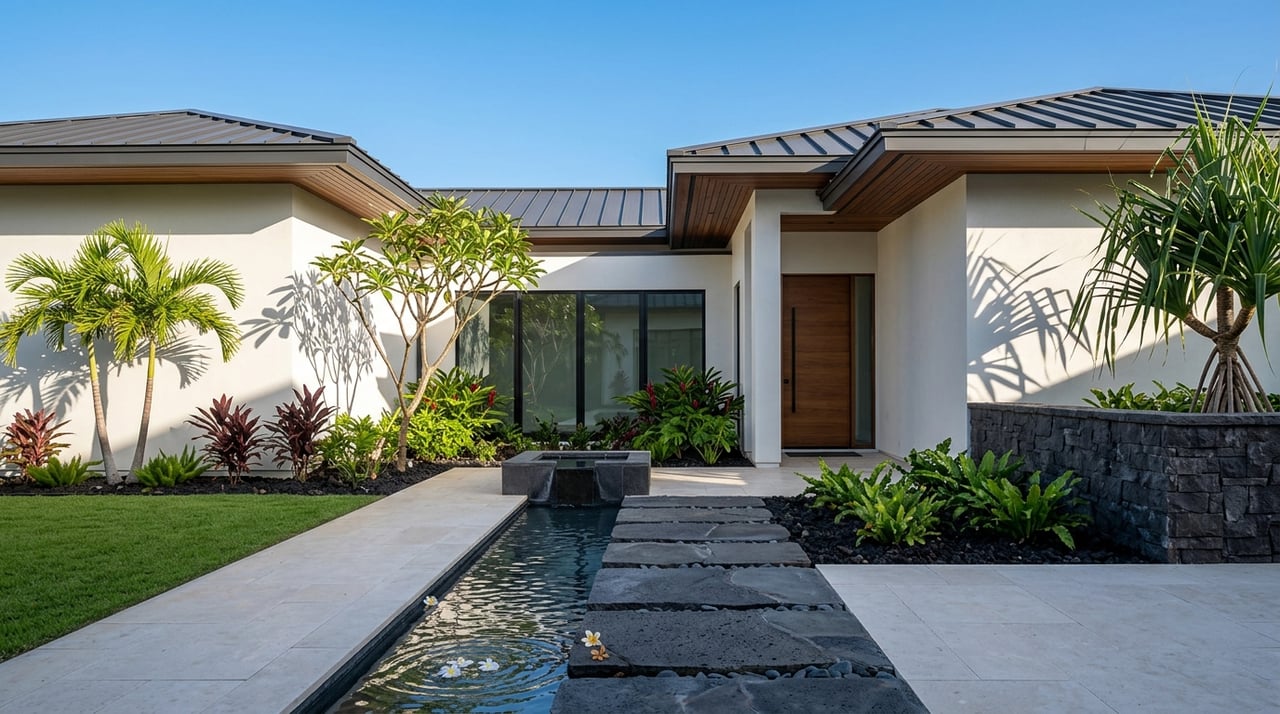
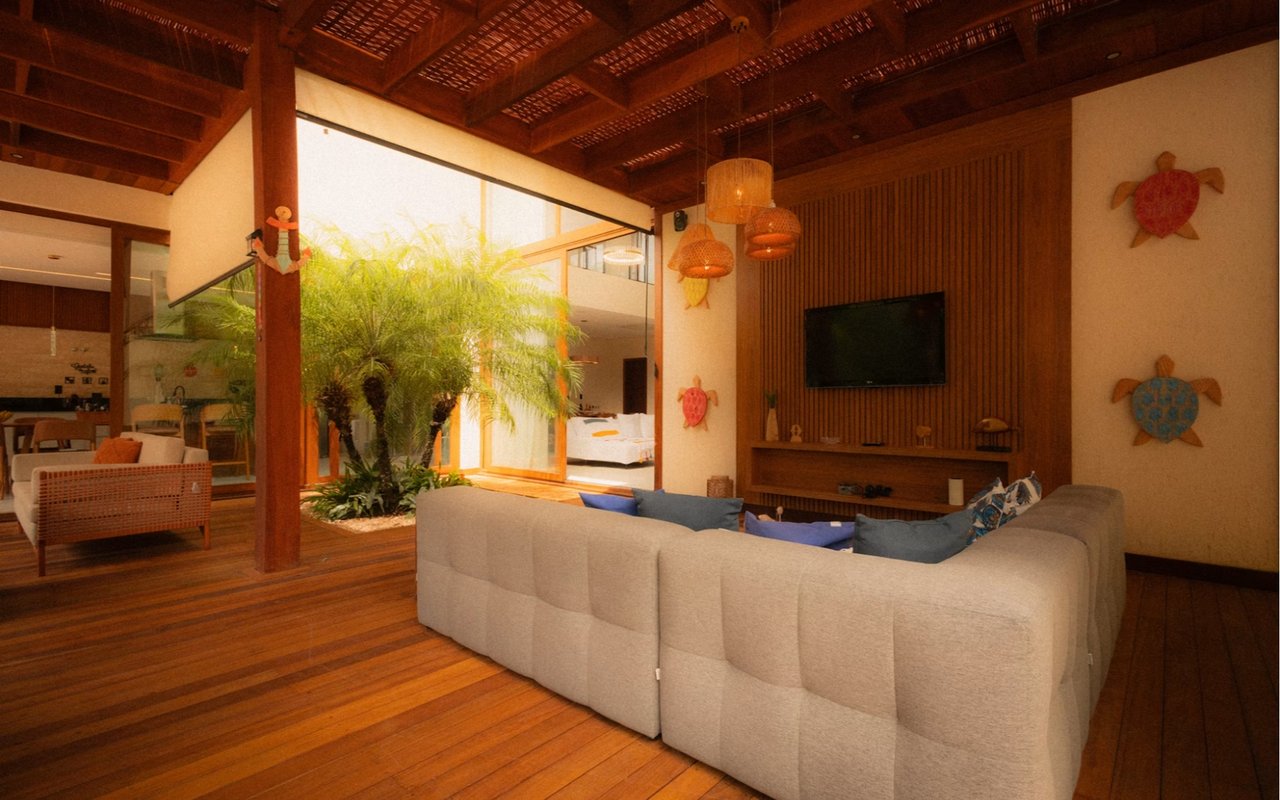
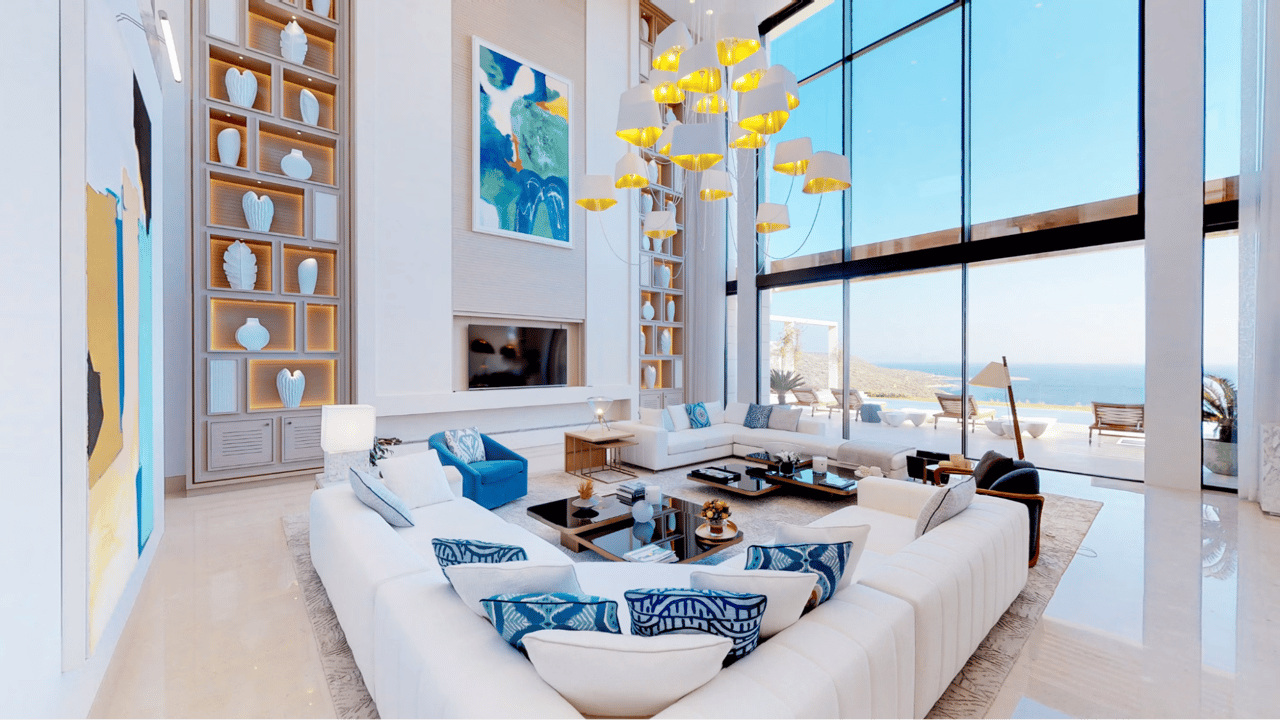
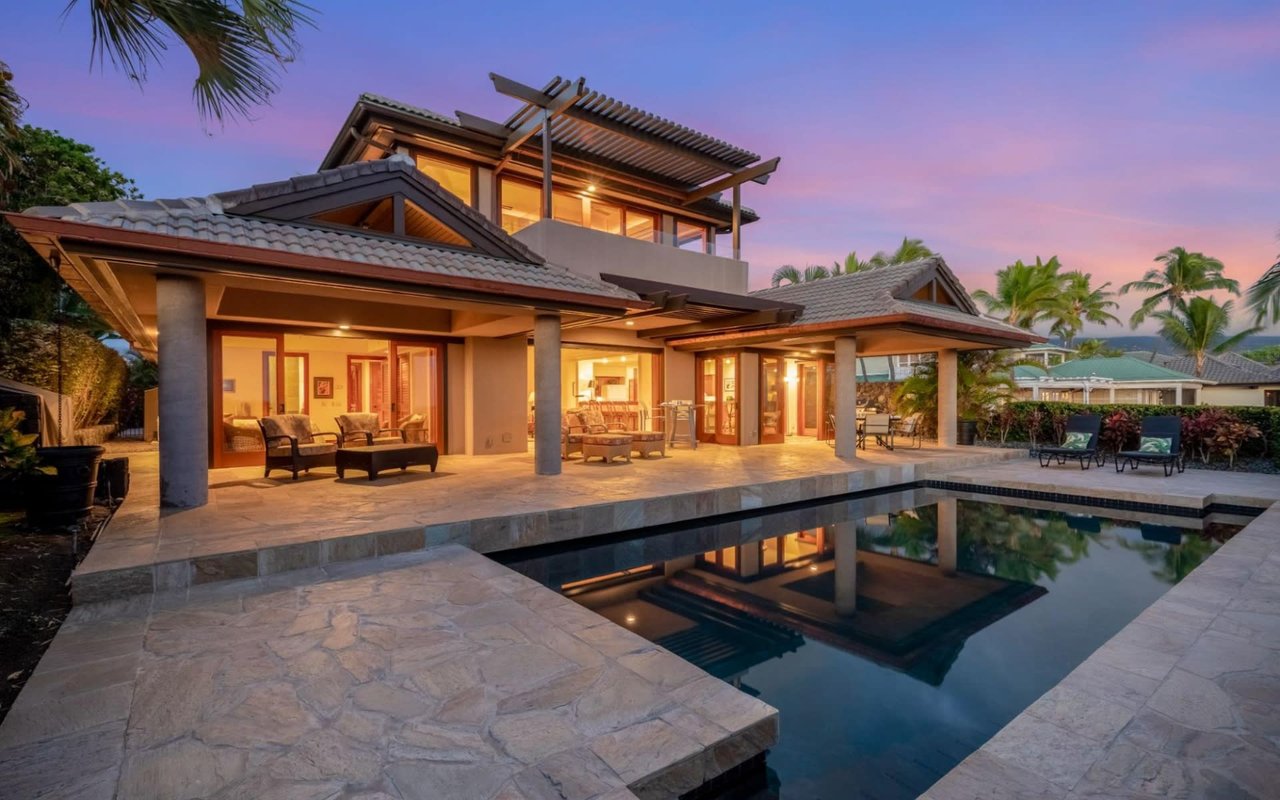
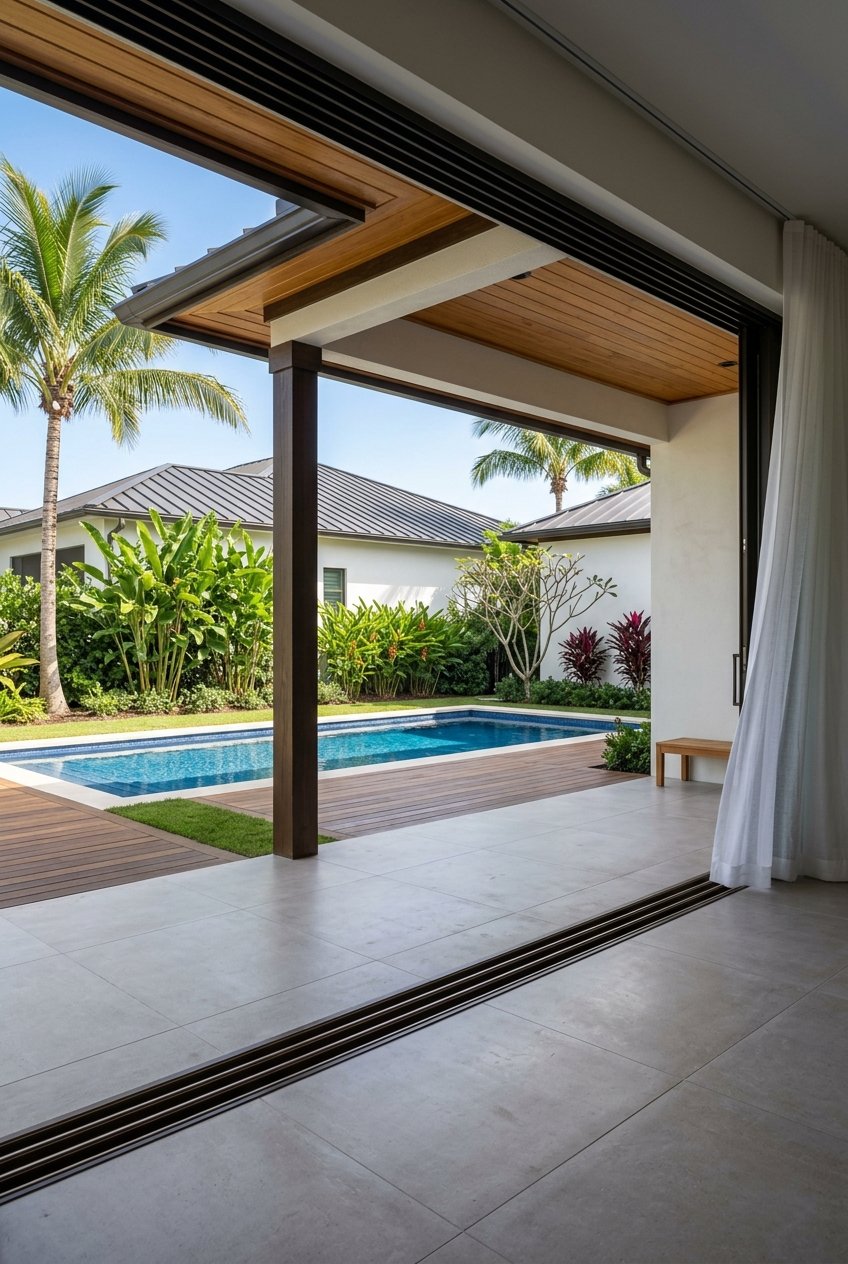
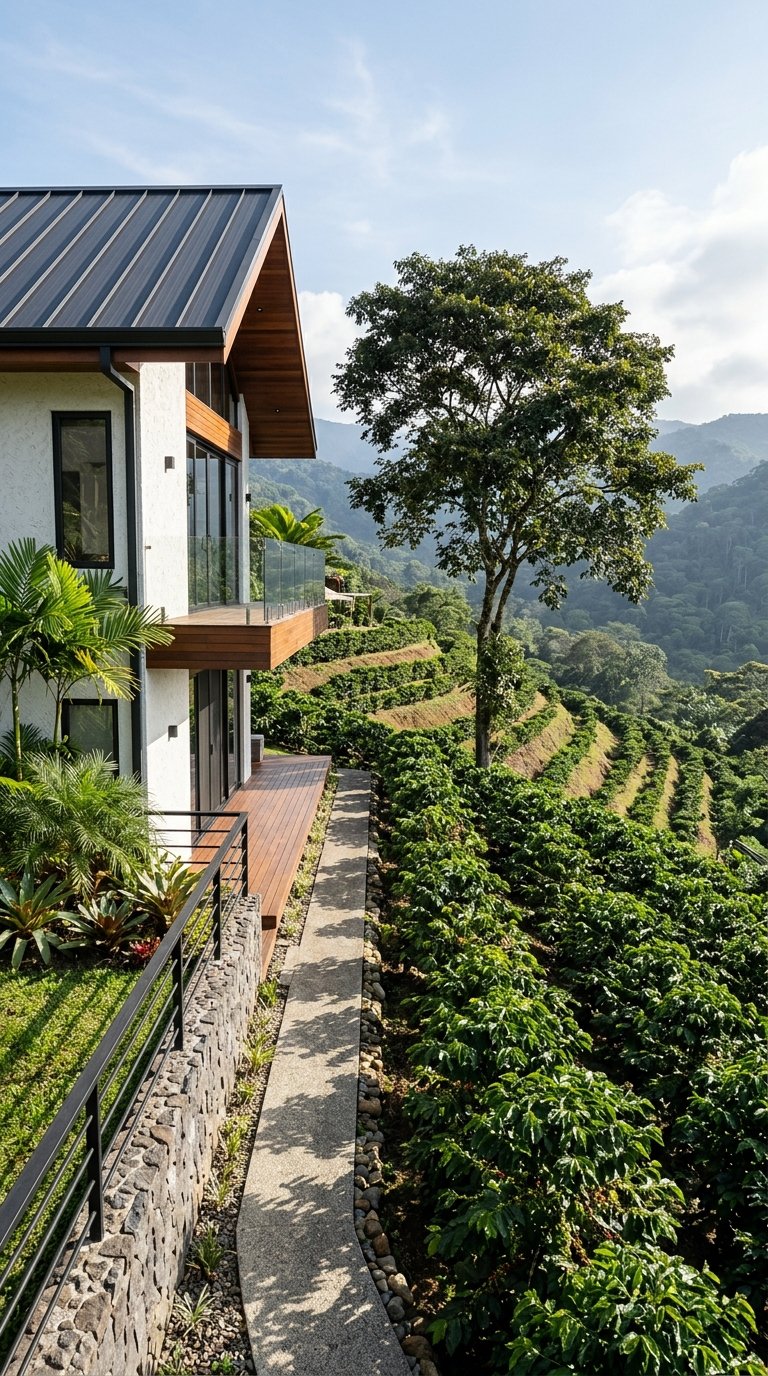
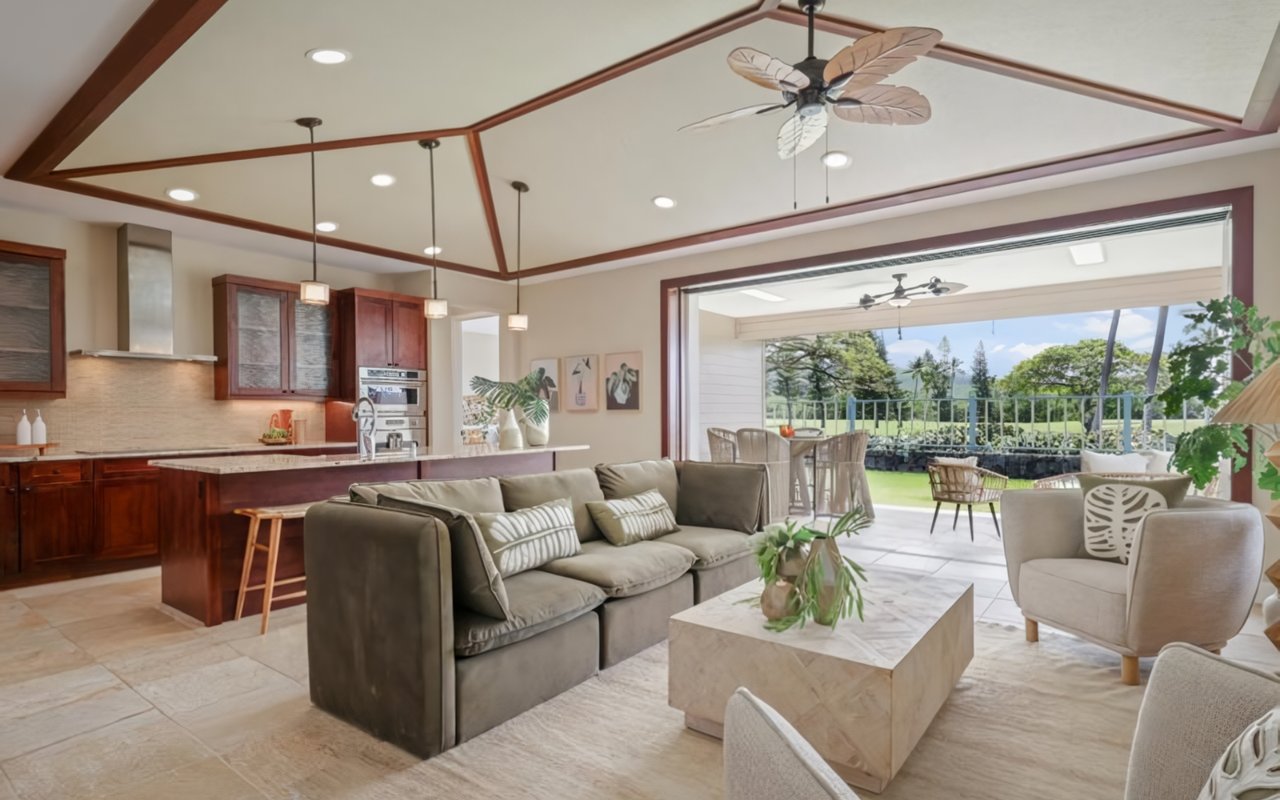
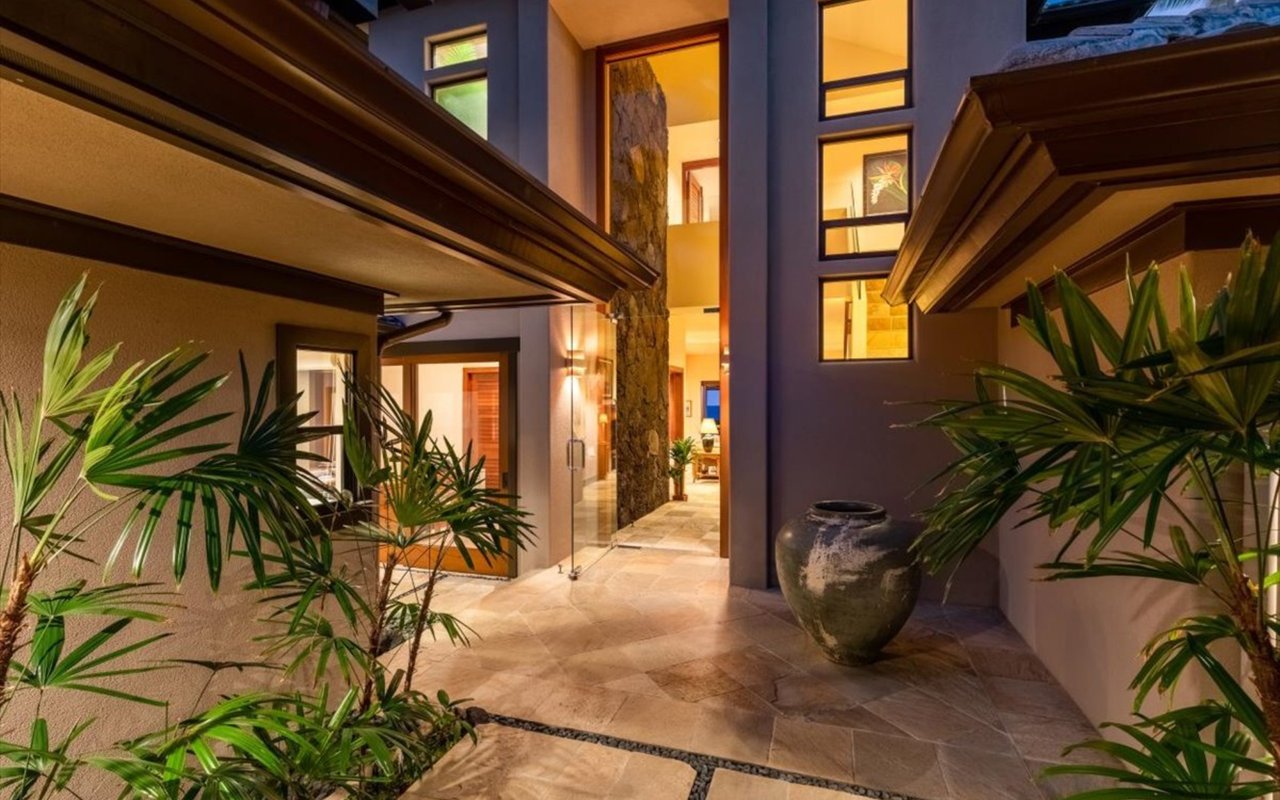
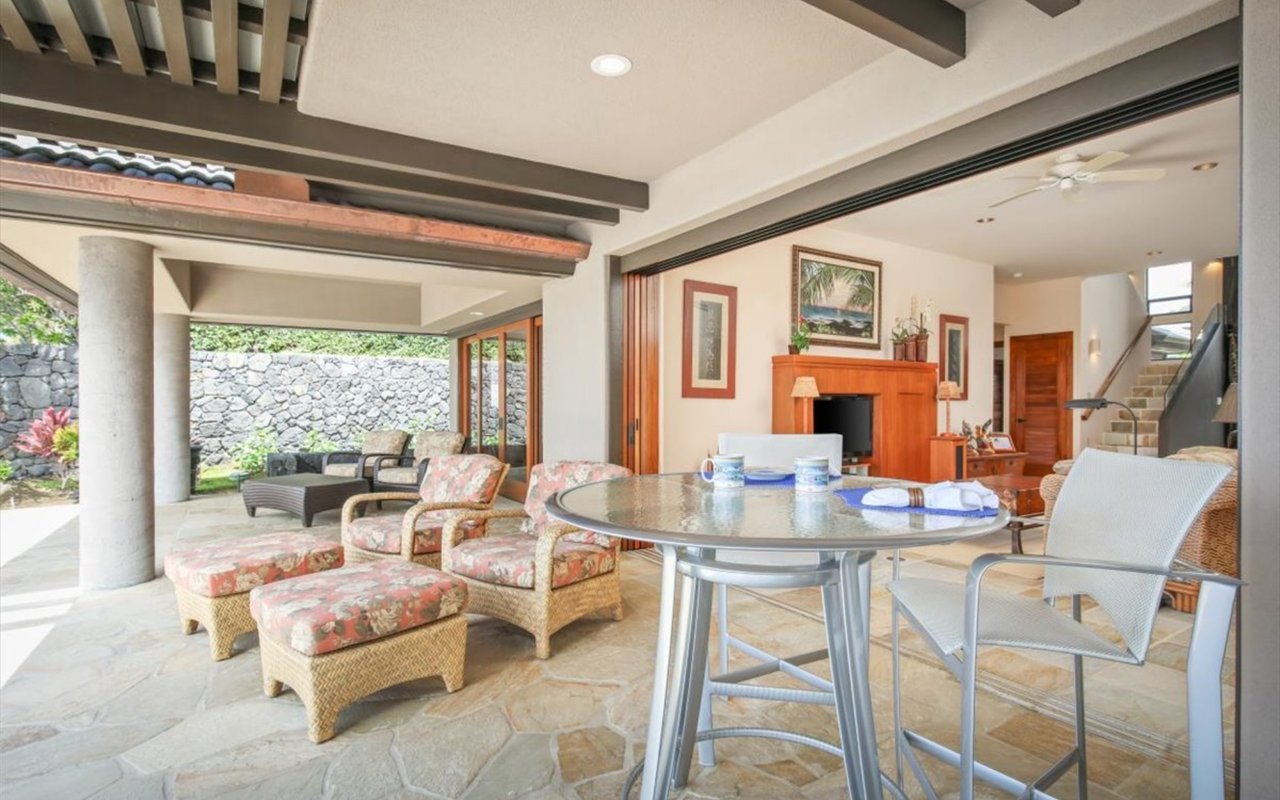
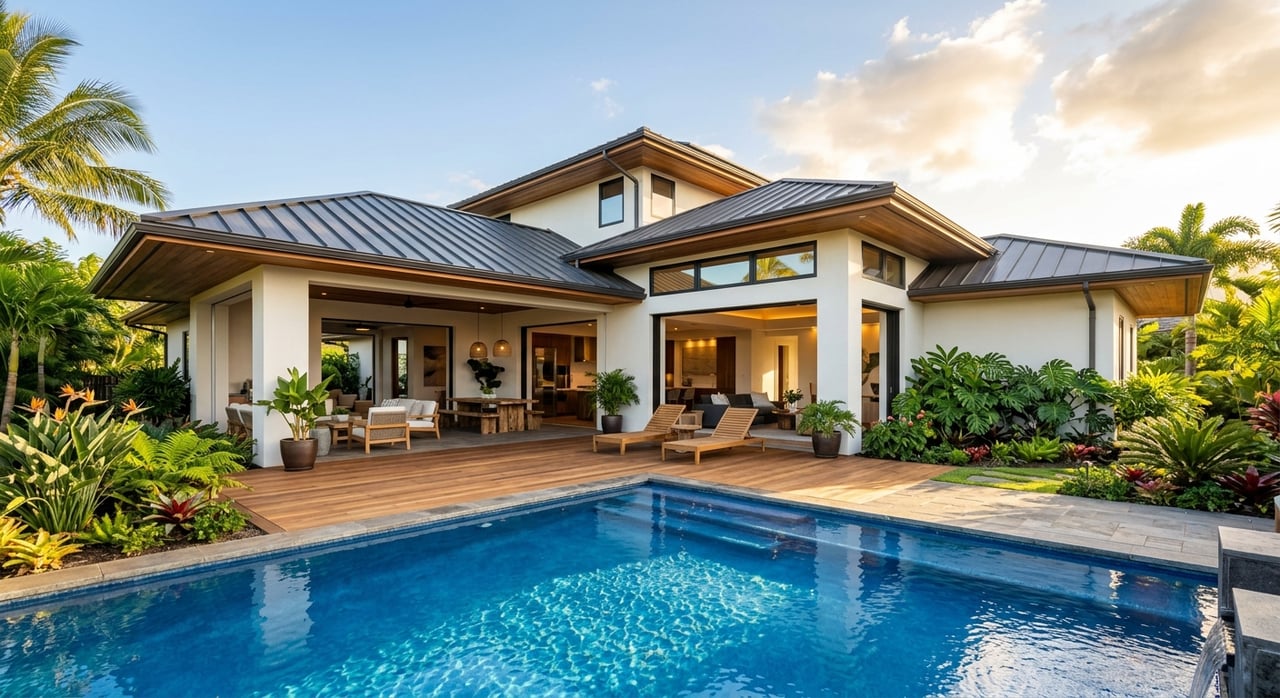
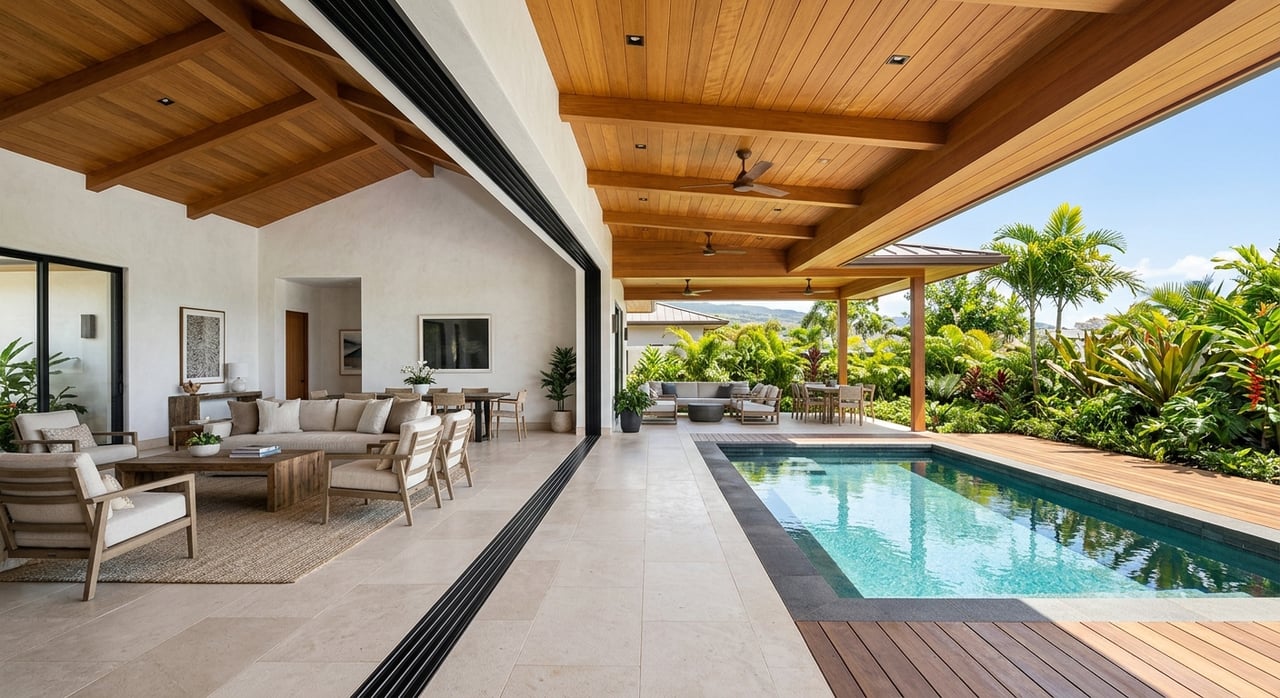
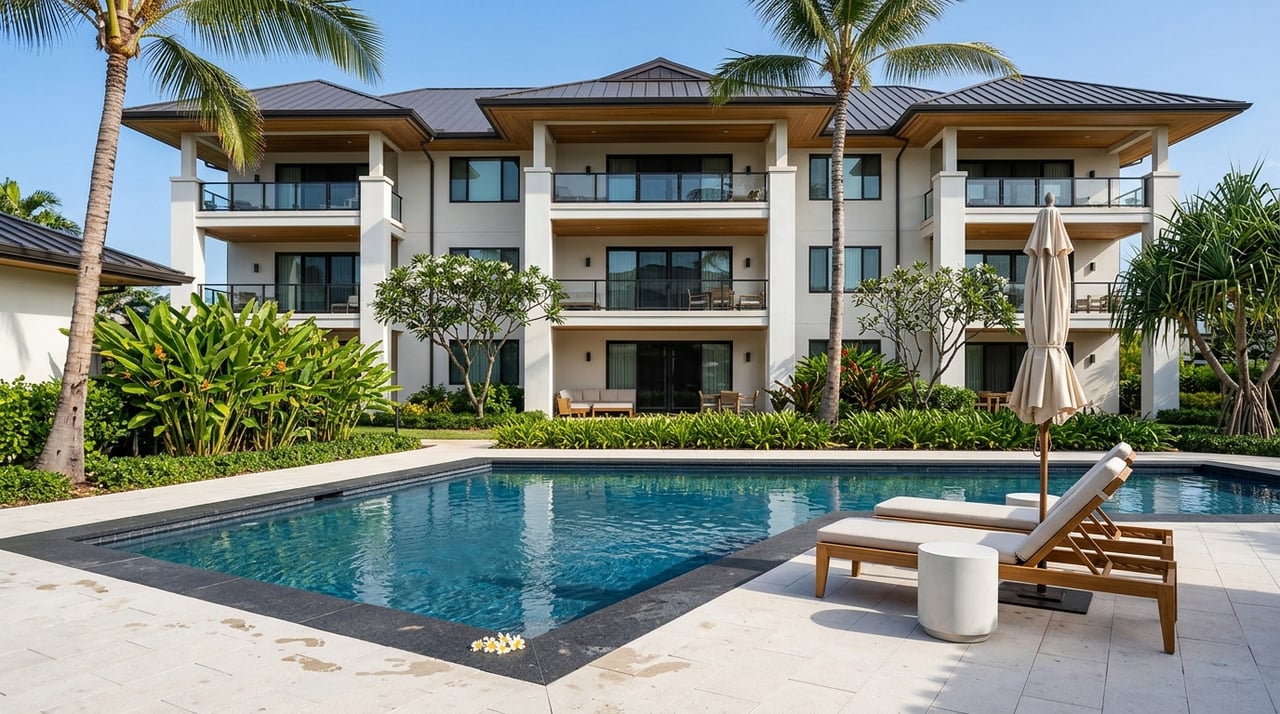
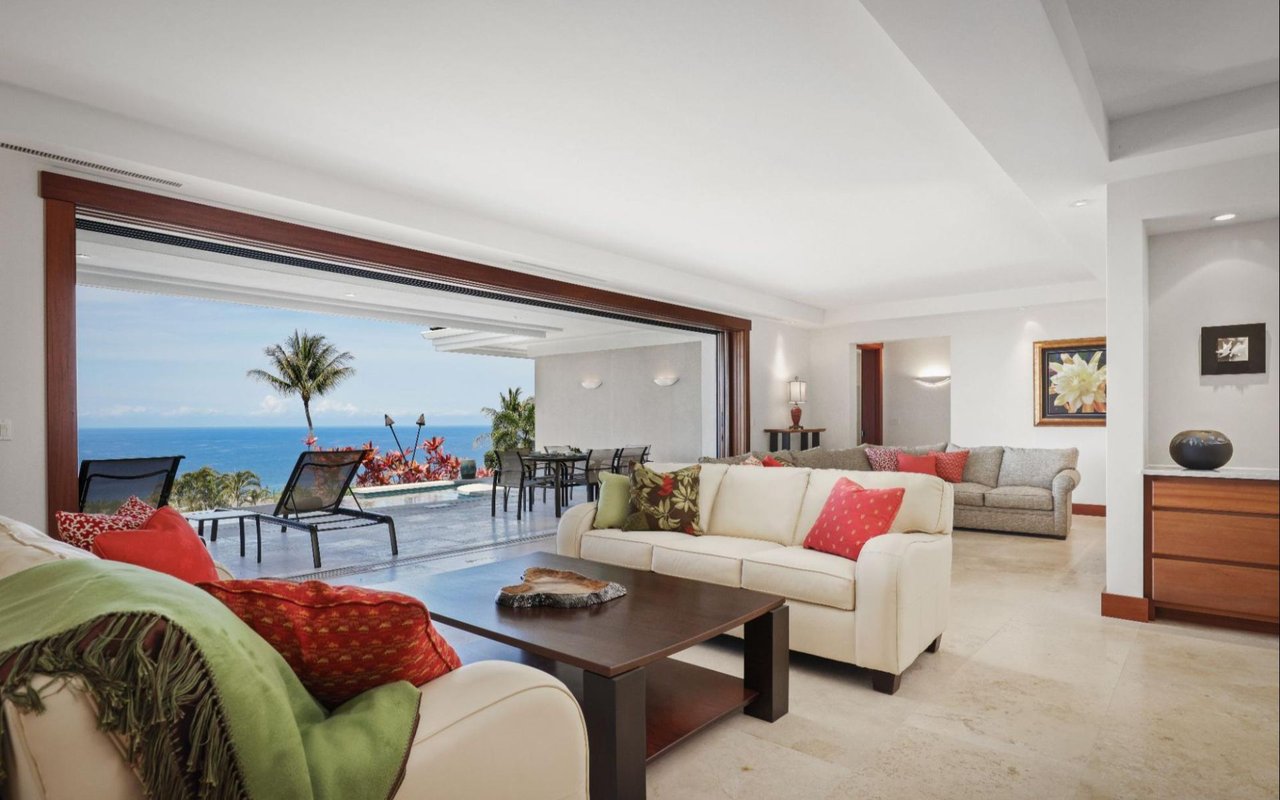
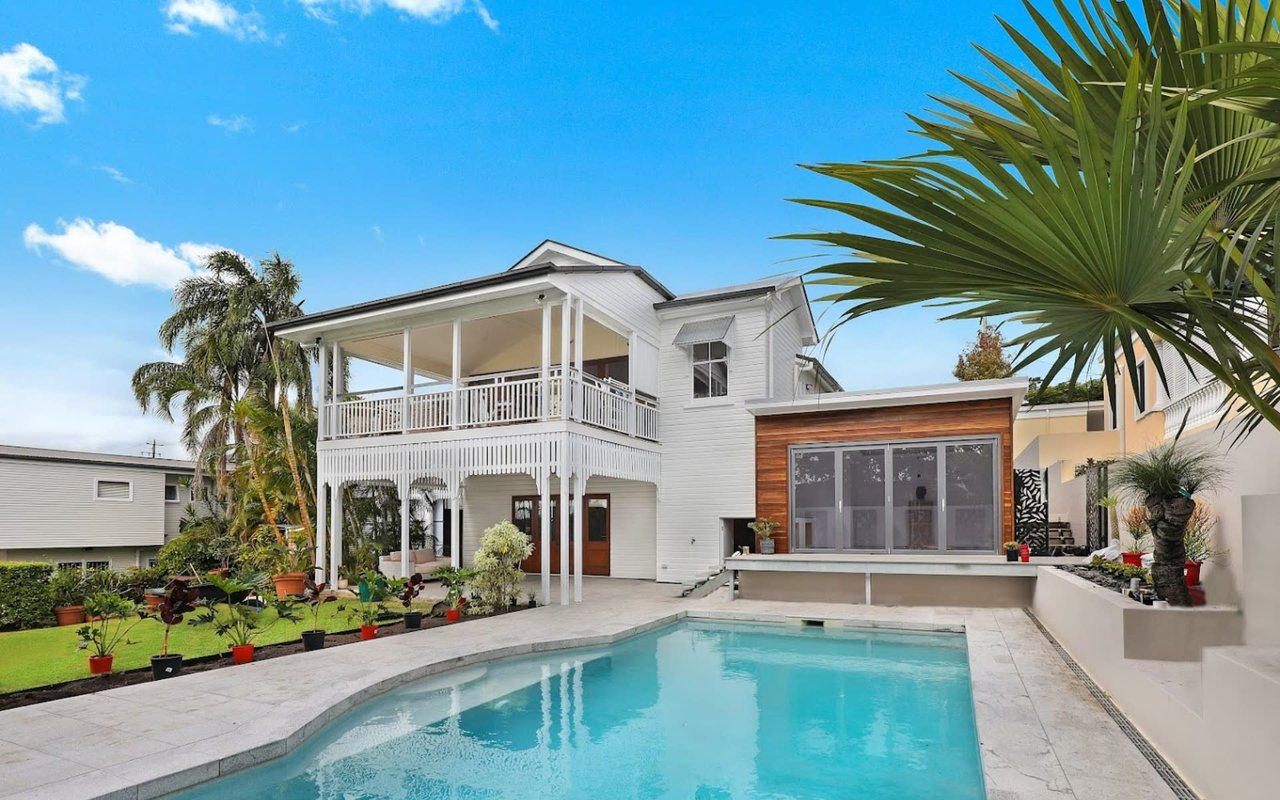
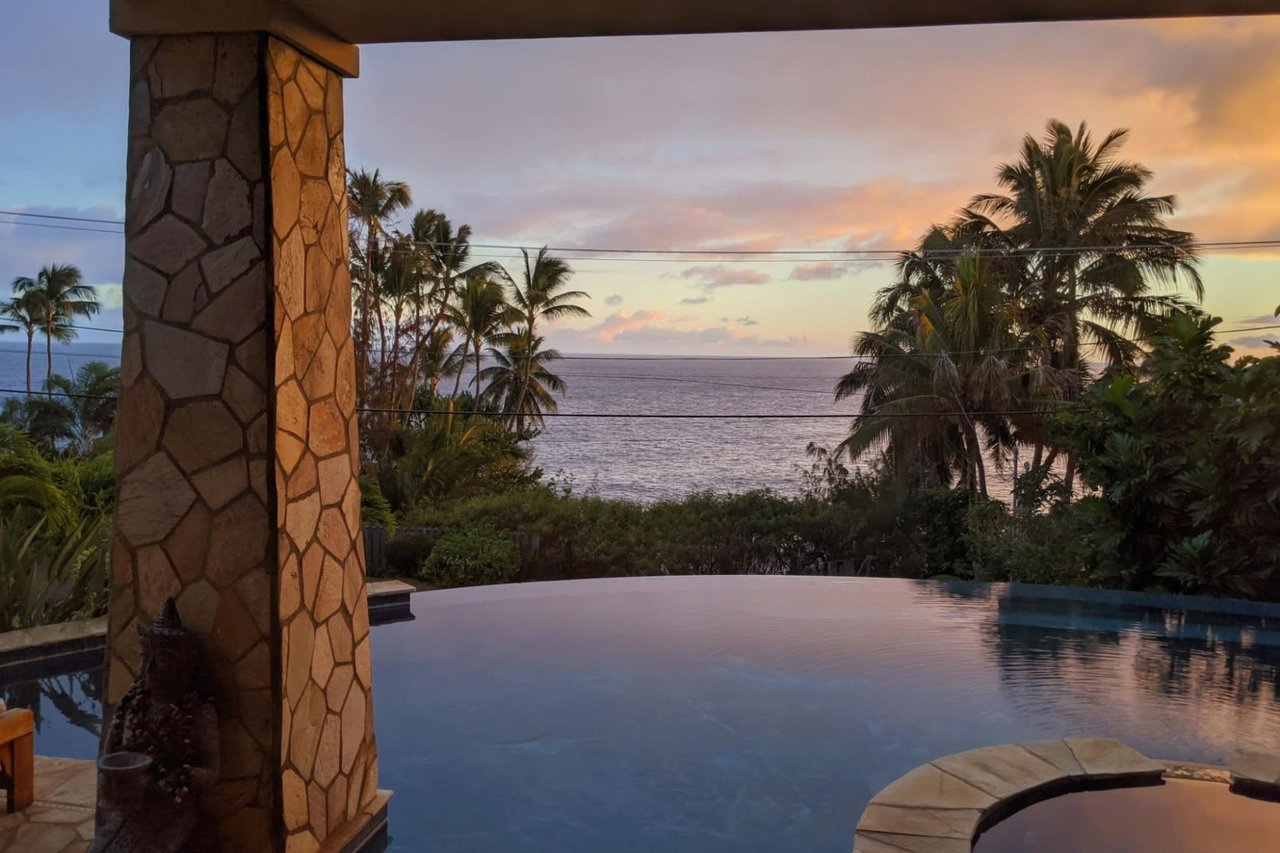
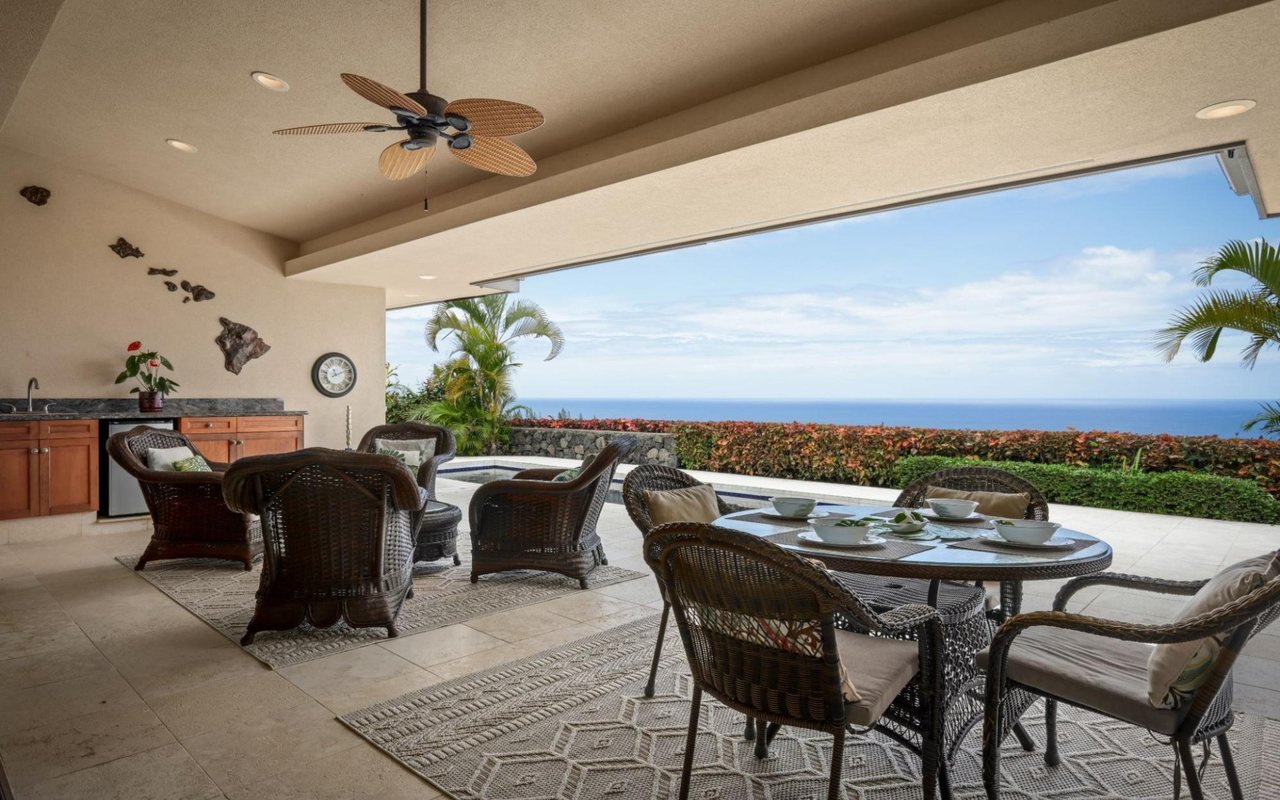
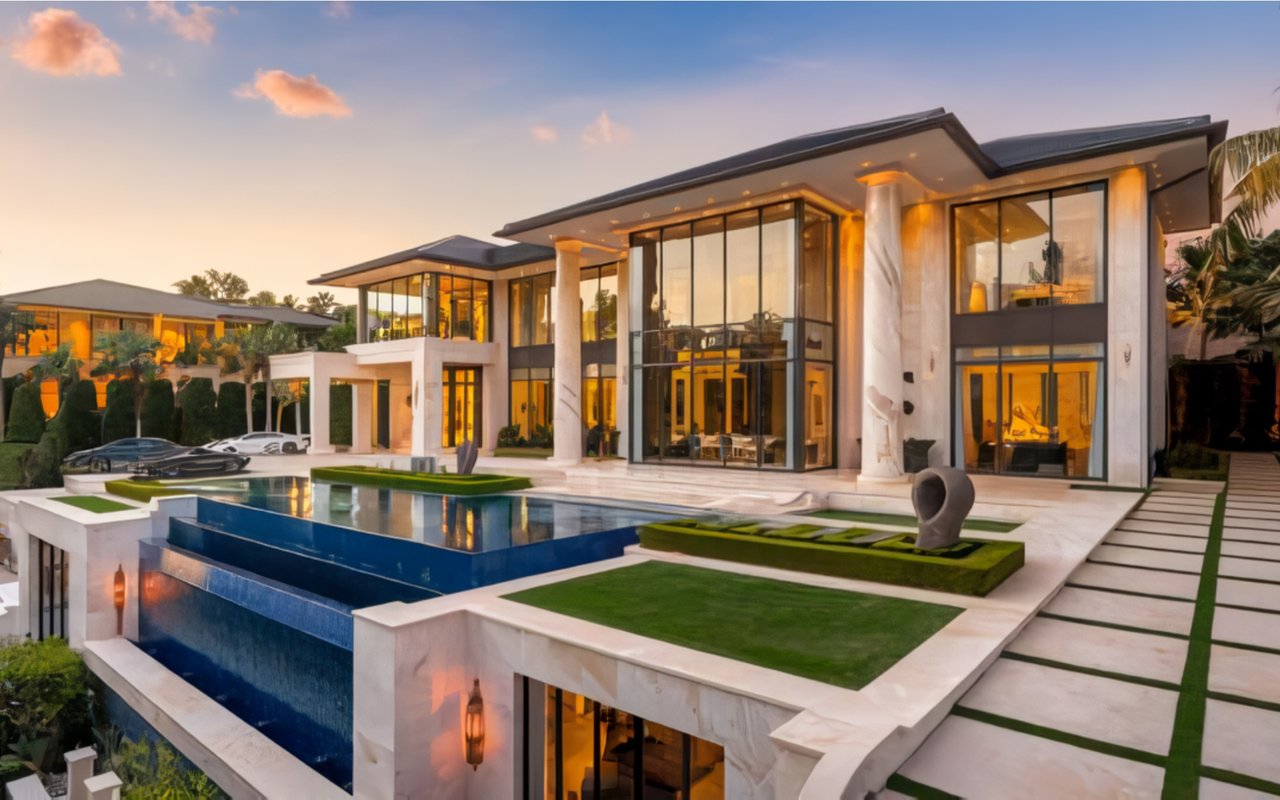
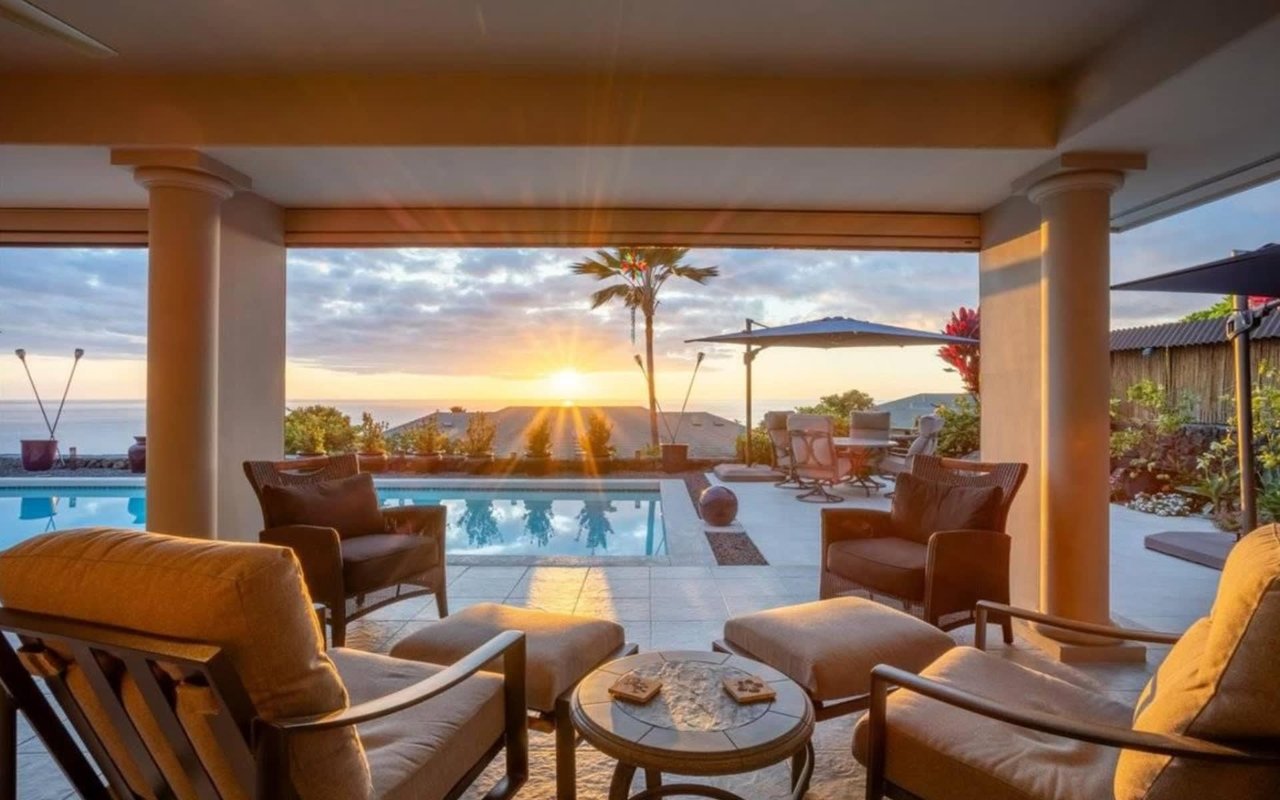
Today's luxury homes throughout Kona increasingly emphasize a seamless connection between indoor living space and the outdoors.
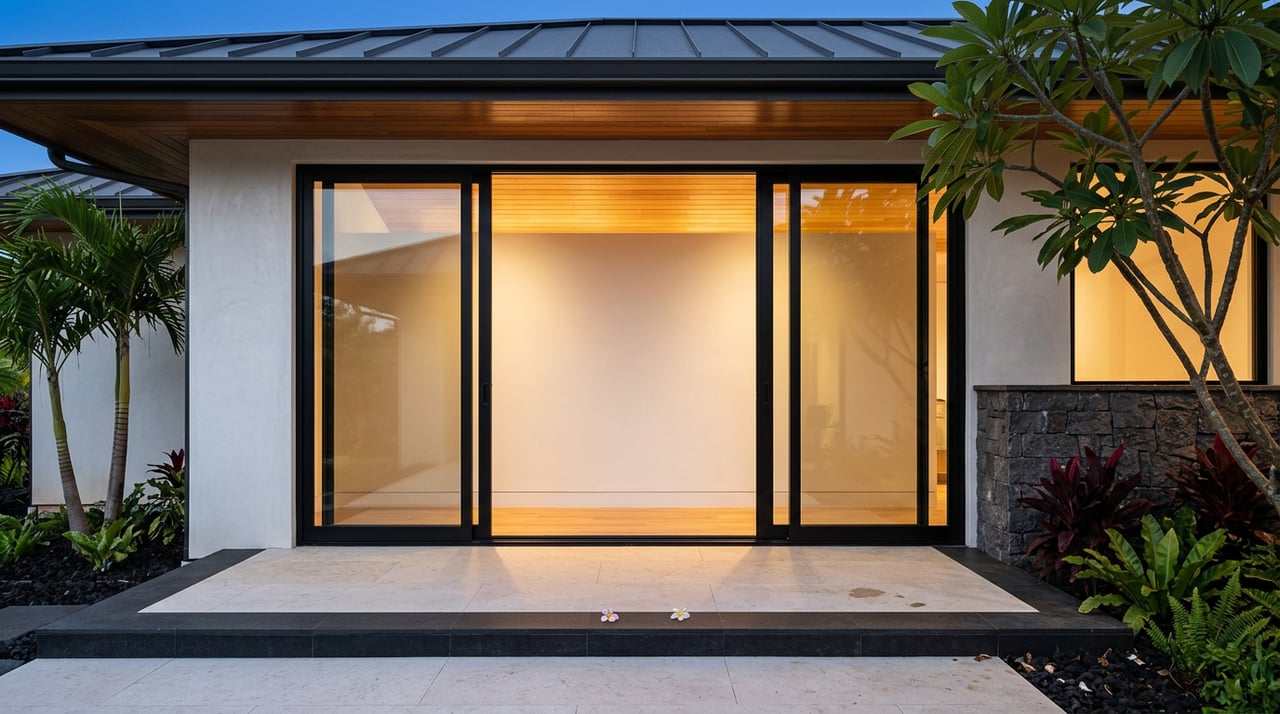
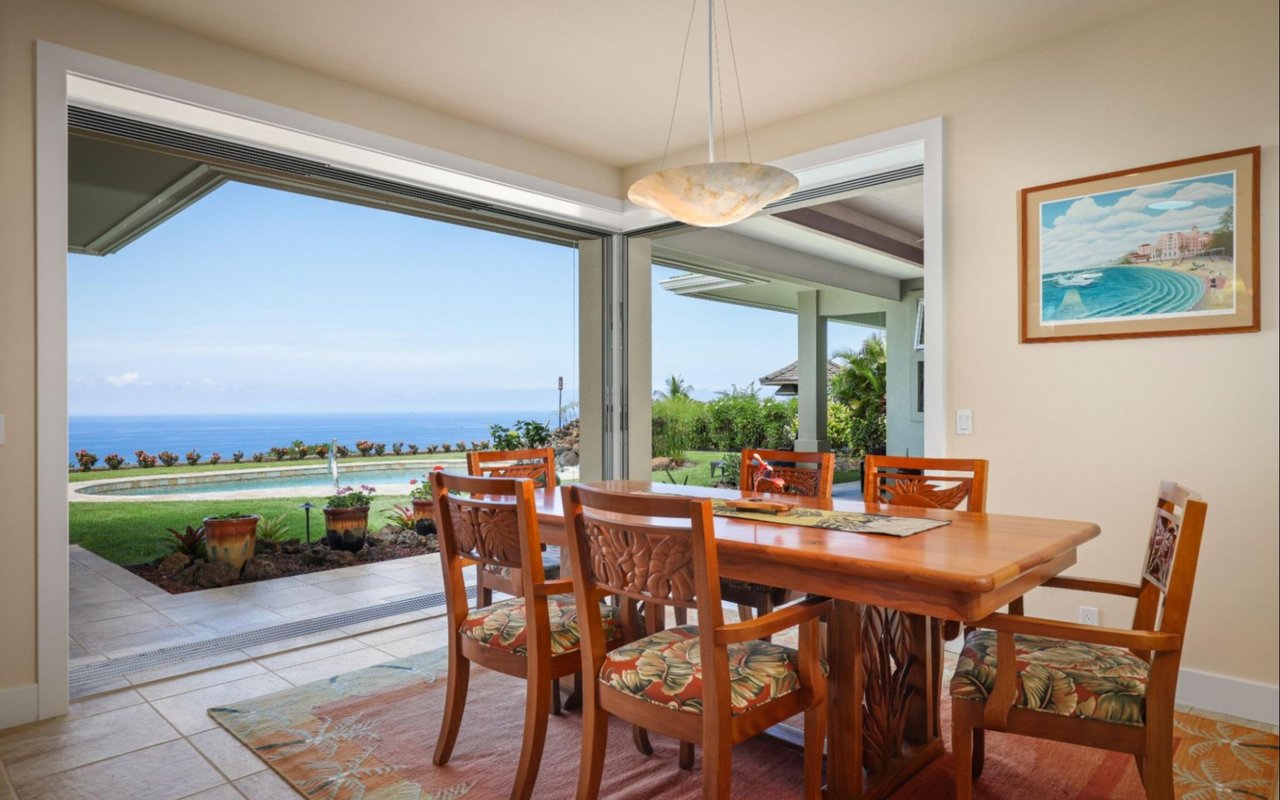
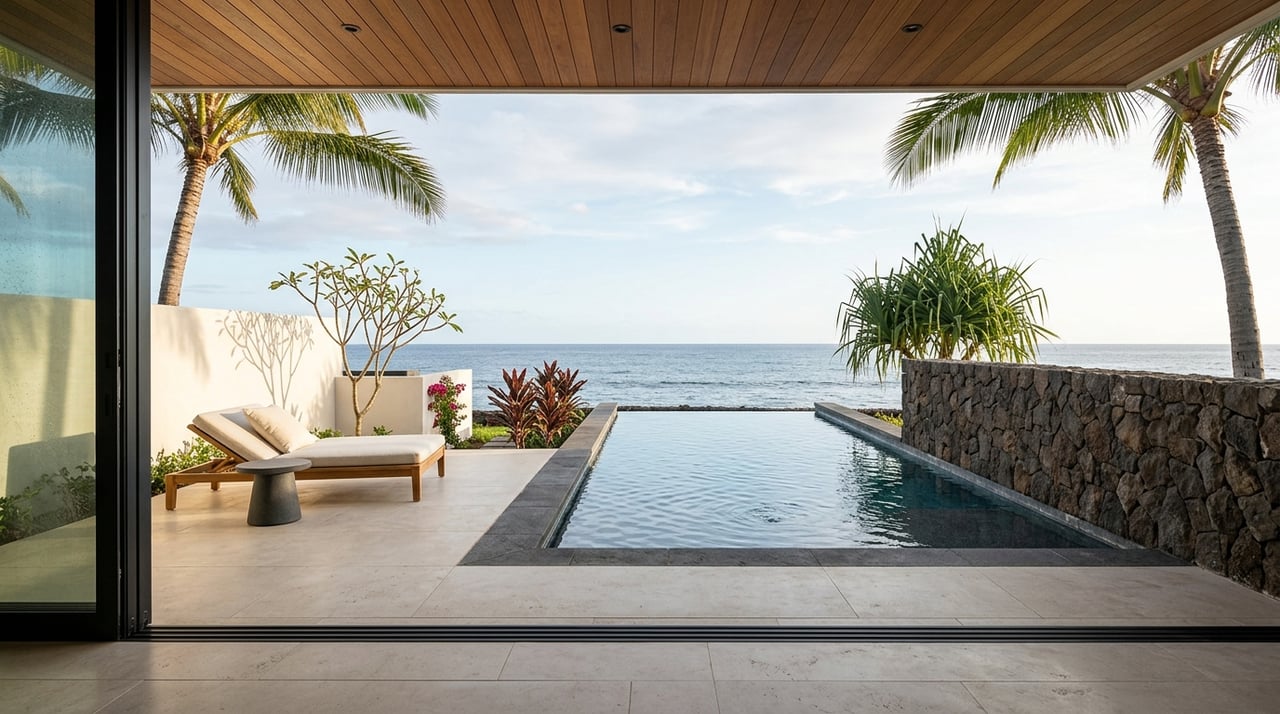
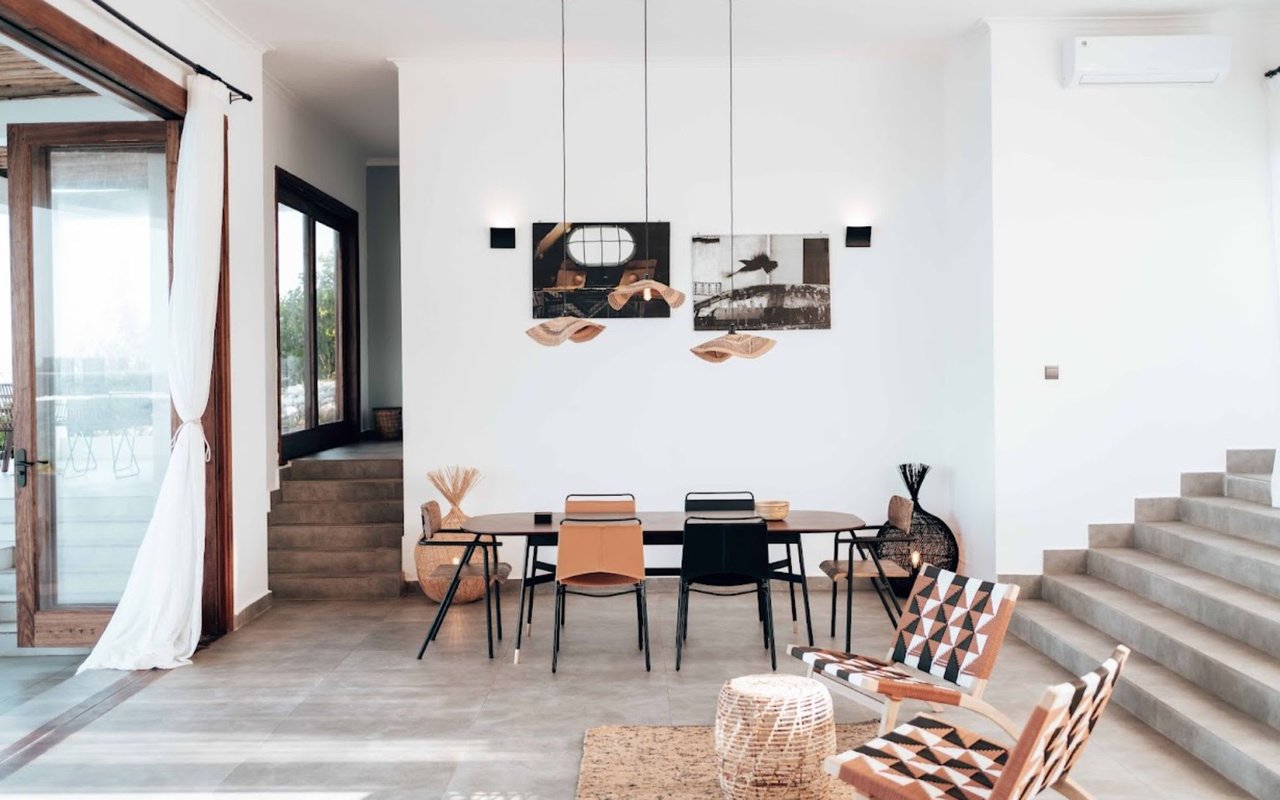
- Retractable wall systems: Sliding or folding glass walls blur the line between interior rooms and outdoor lanai space.
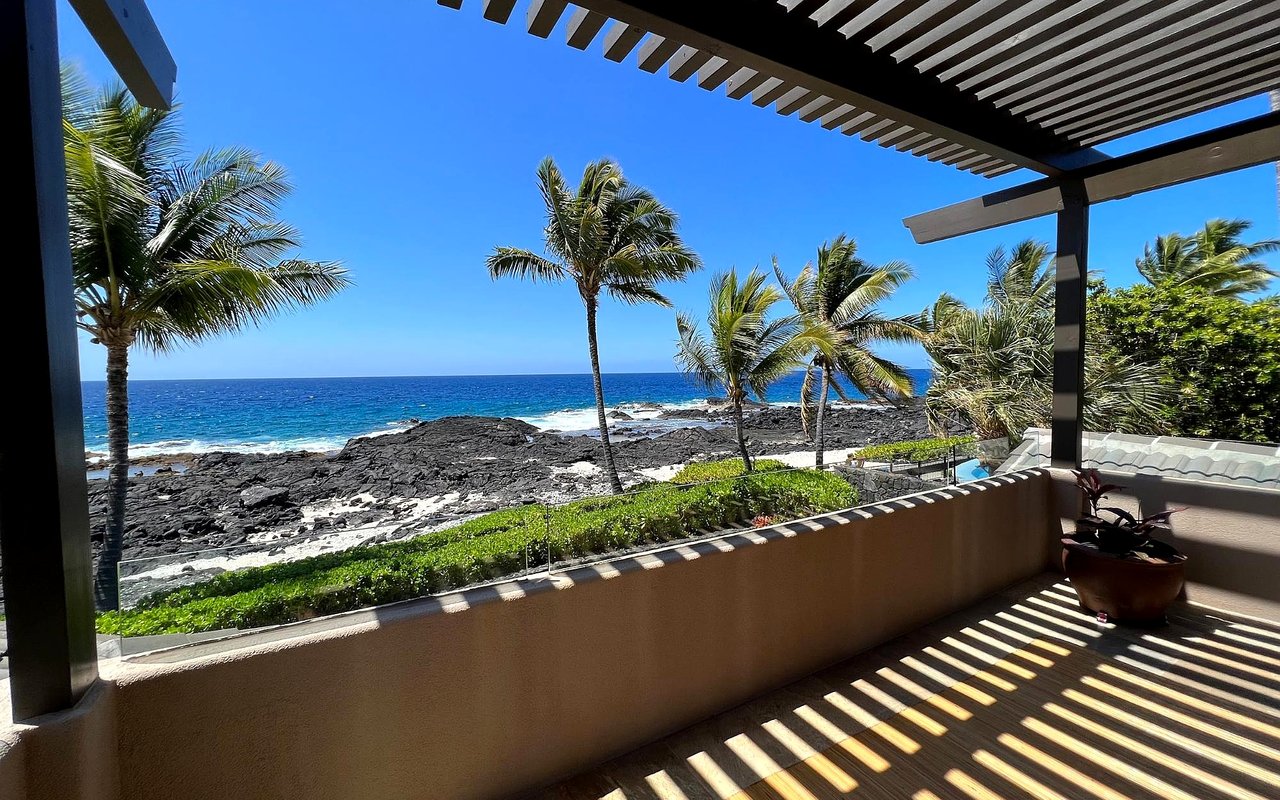
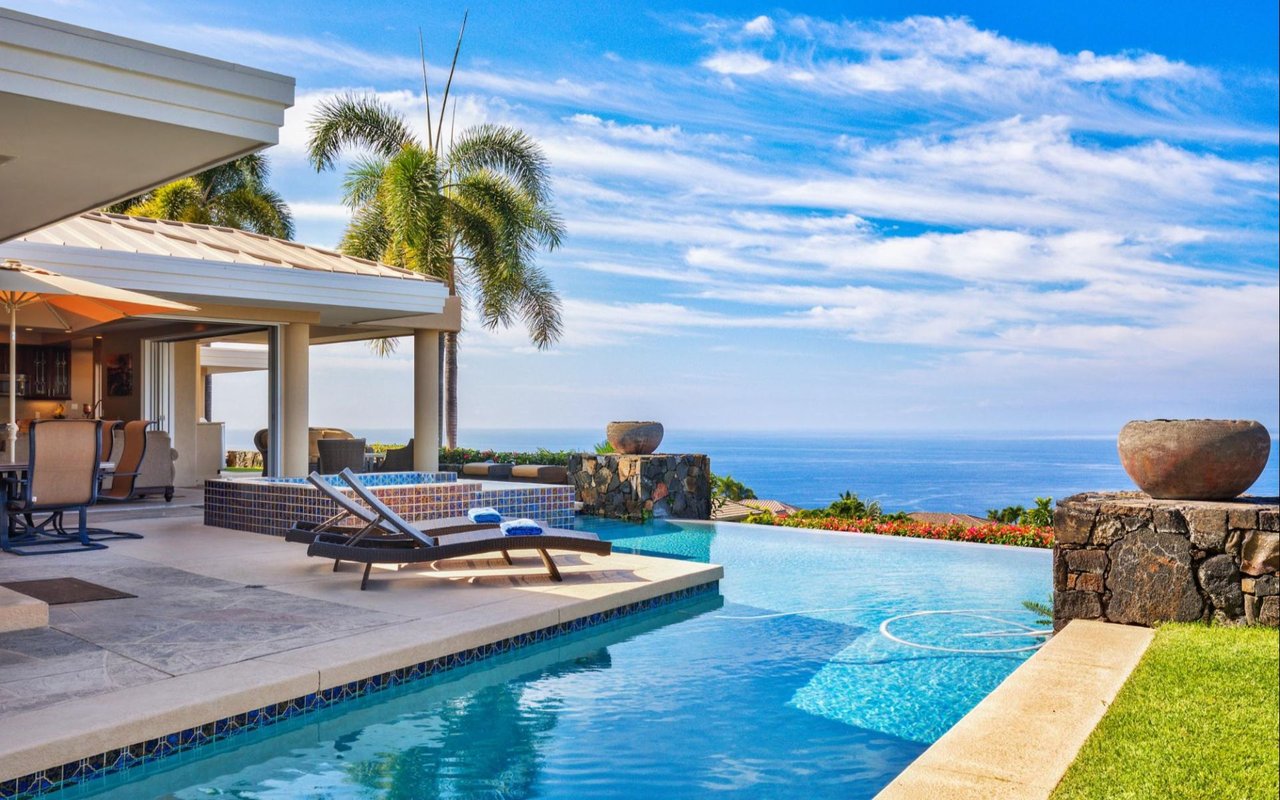
- Ocean-oriented layouts: Floor plans increasingly prioritize sightlines toward the water over other considerations.
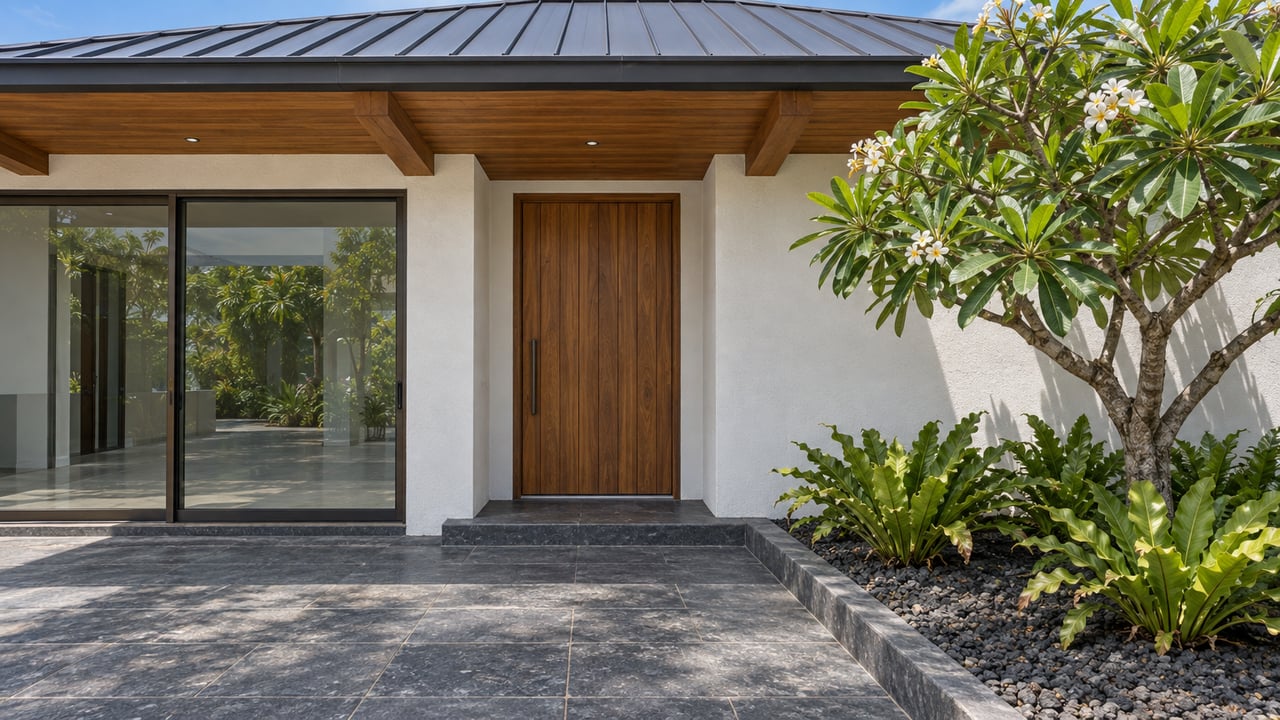
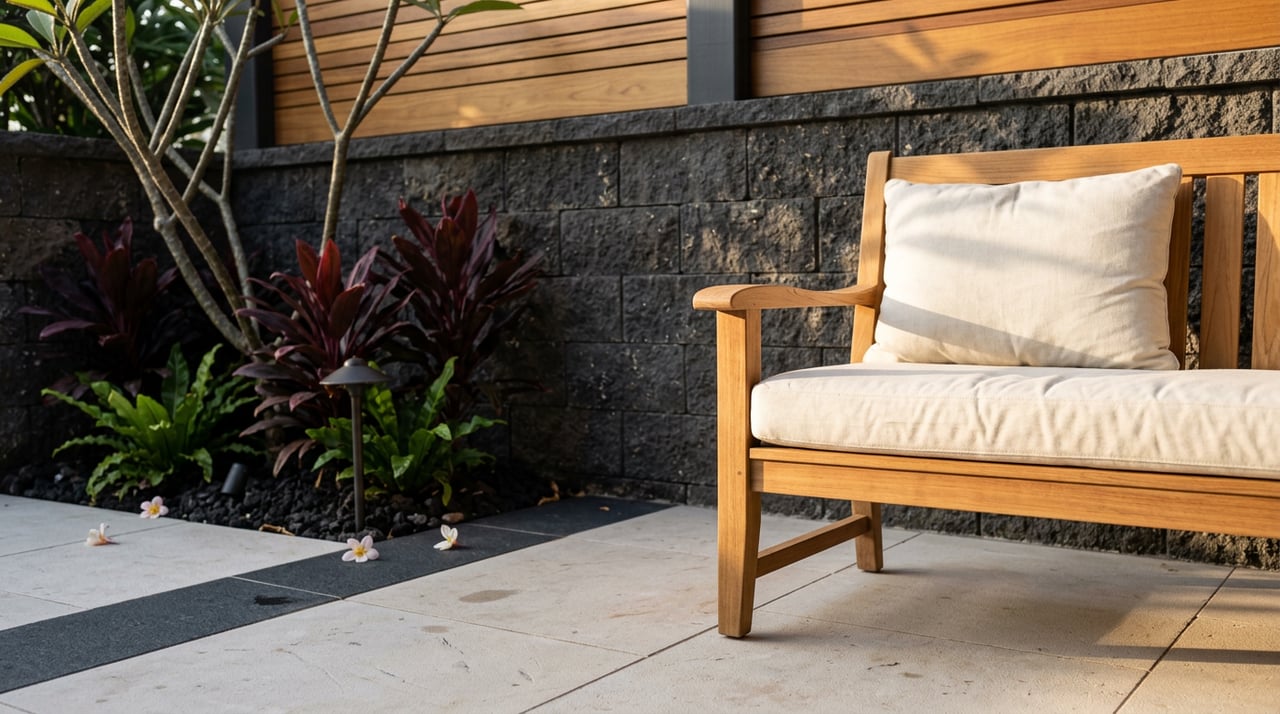
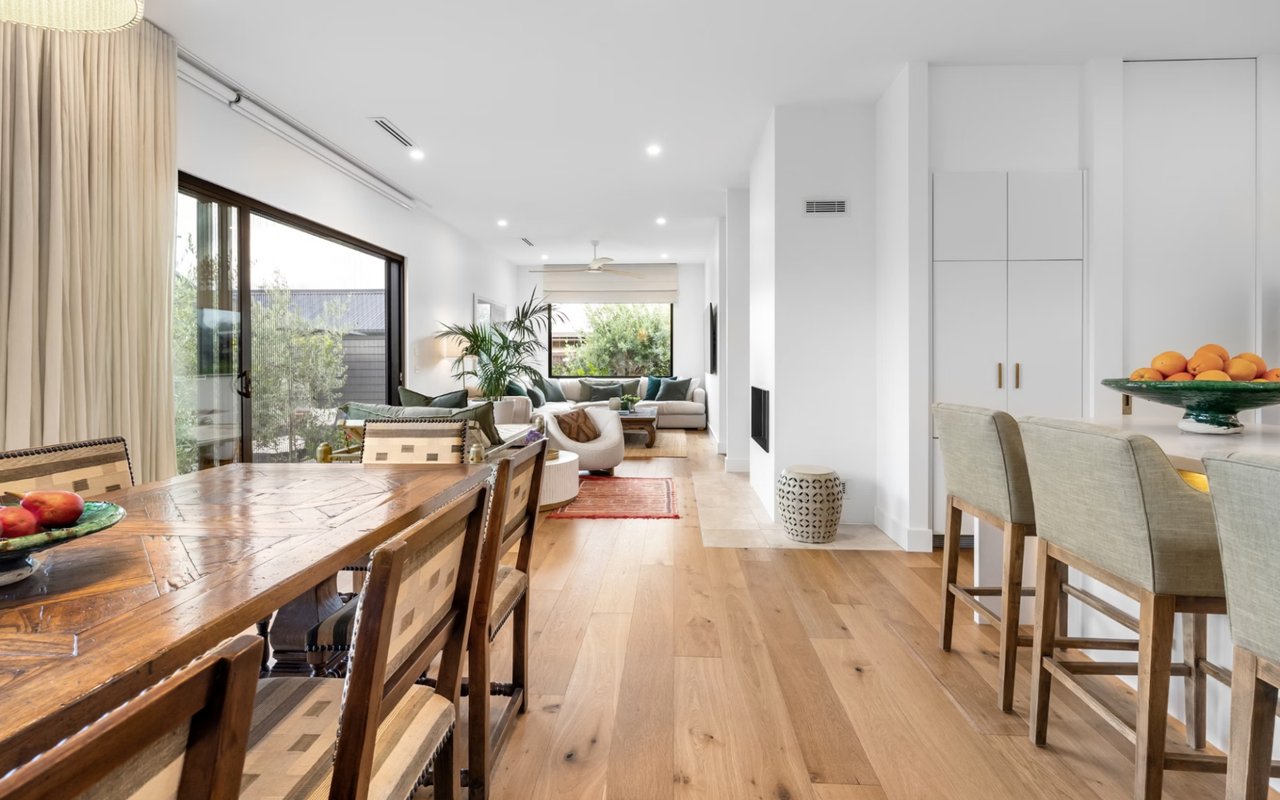
- Natural material continuity: Stone, wood, and other natural materials often continue seamlessly from interior to exterior spaces.
Modern homes here often feel like a direct continuation of design principles that trace back generations.
Contemporary Oceanfront Architecture Today
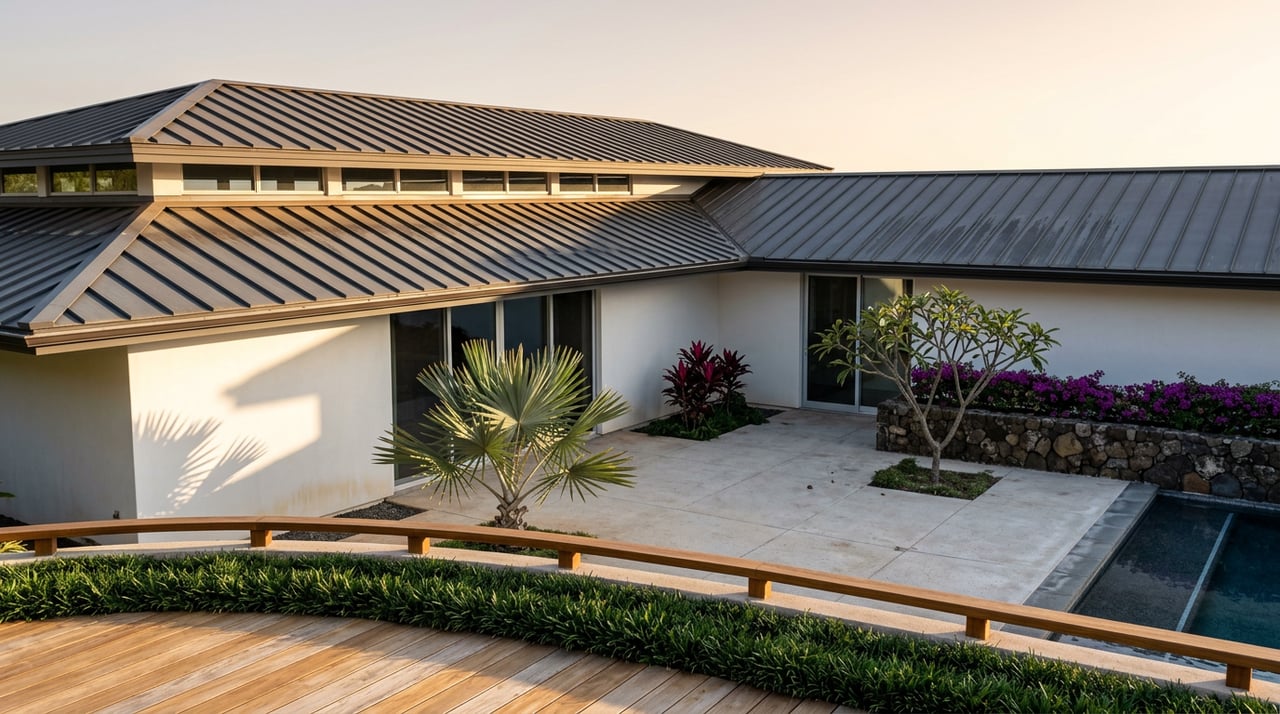
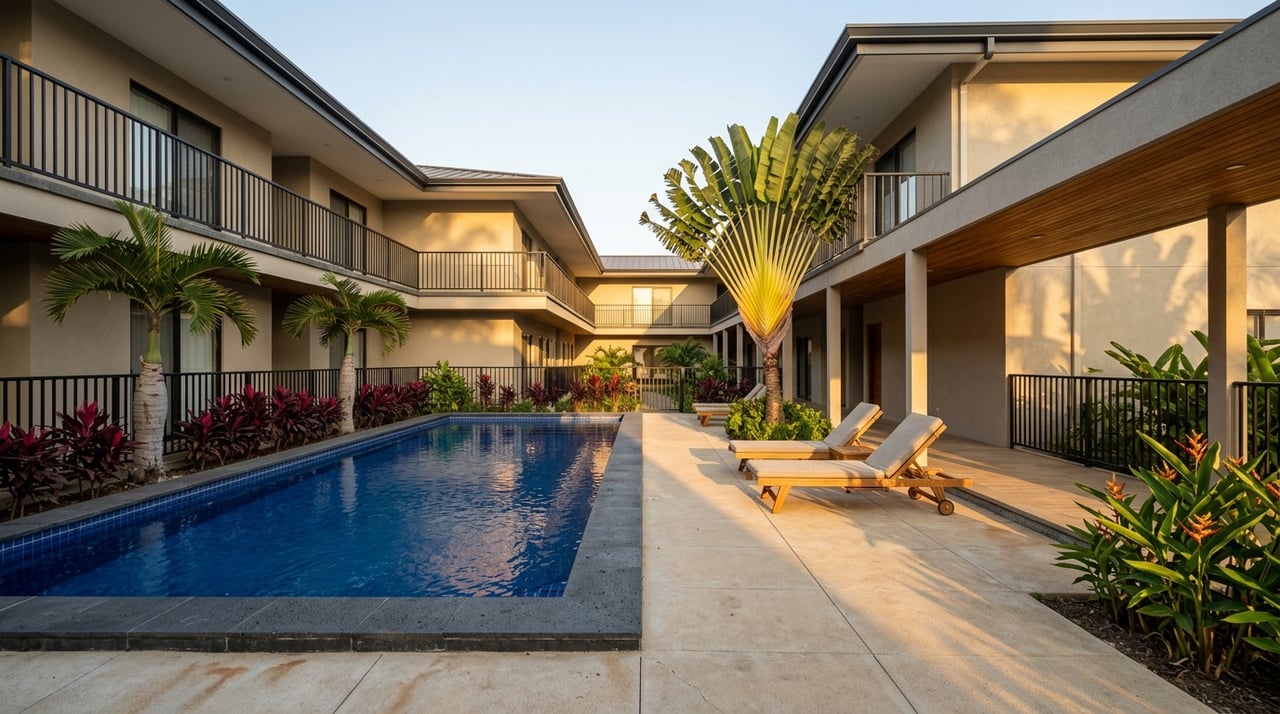
Contemporary architecture along Kona's coastline continues to evolve, building on decades of design tradition unique to this part of the island.
- Sustainable building practices: Newer homes increasingly incorporate energy-efficient systems suited to the tropical climate.
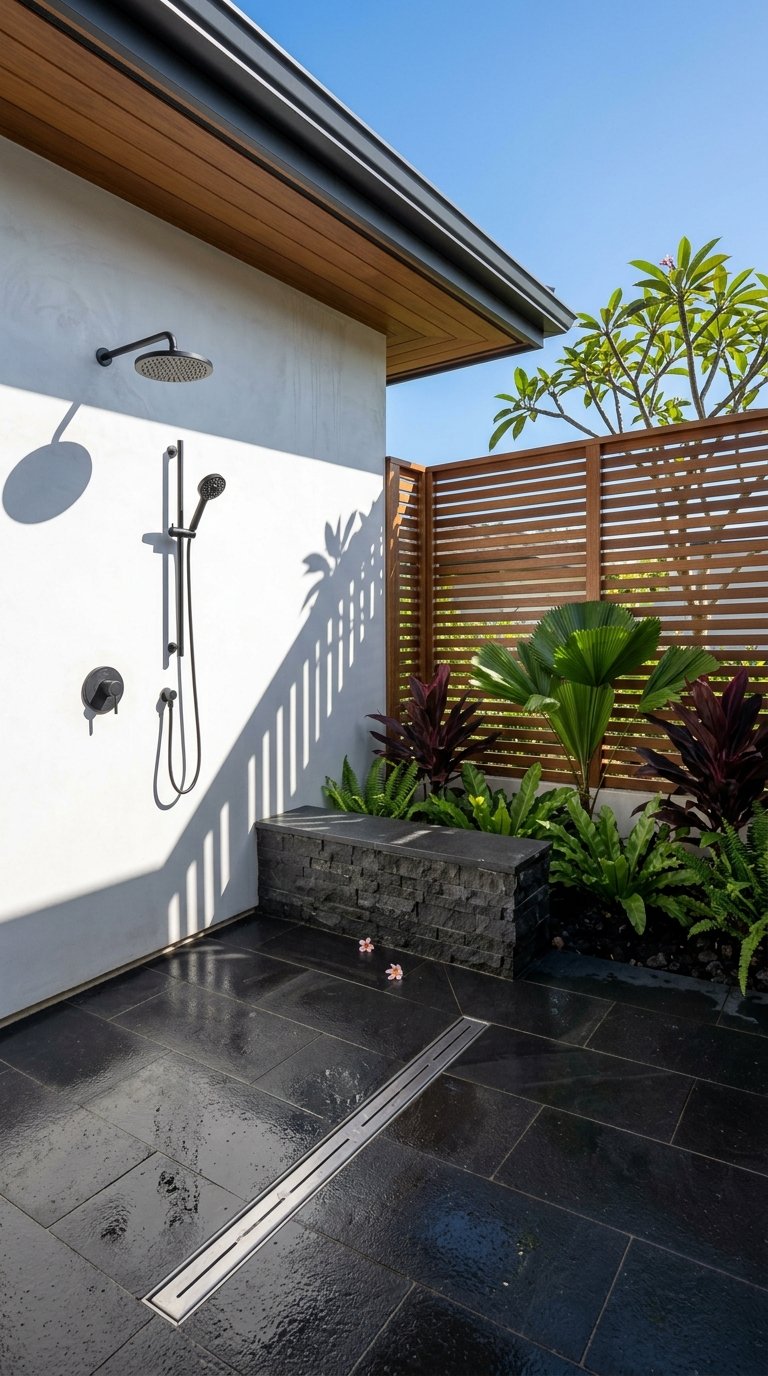
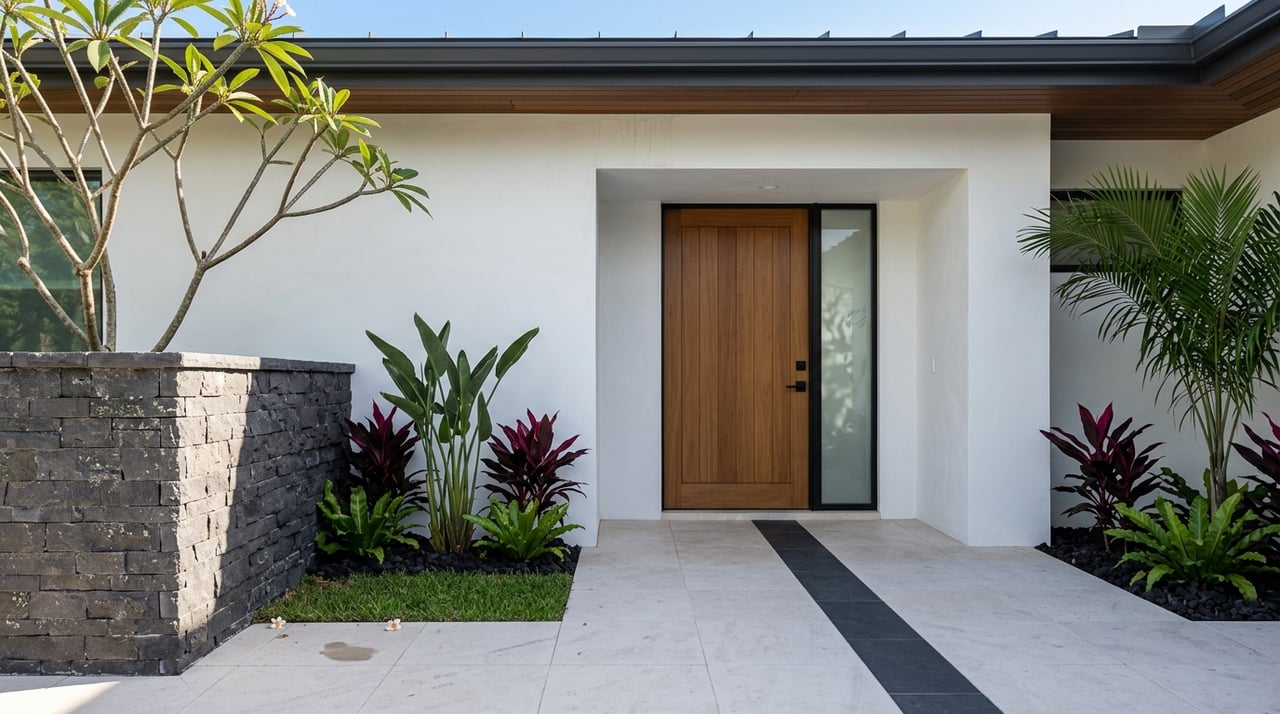
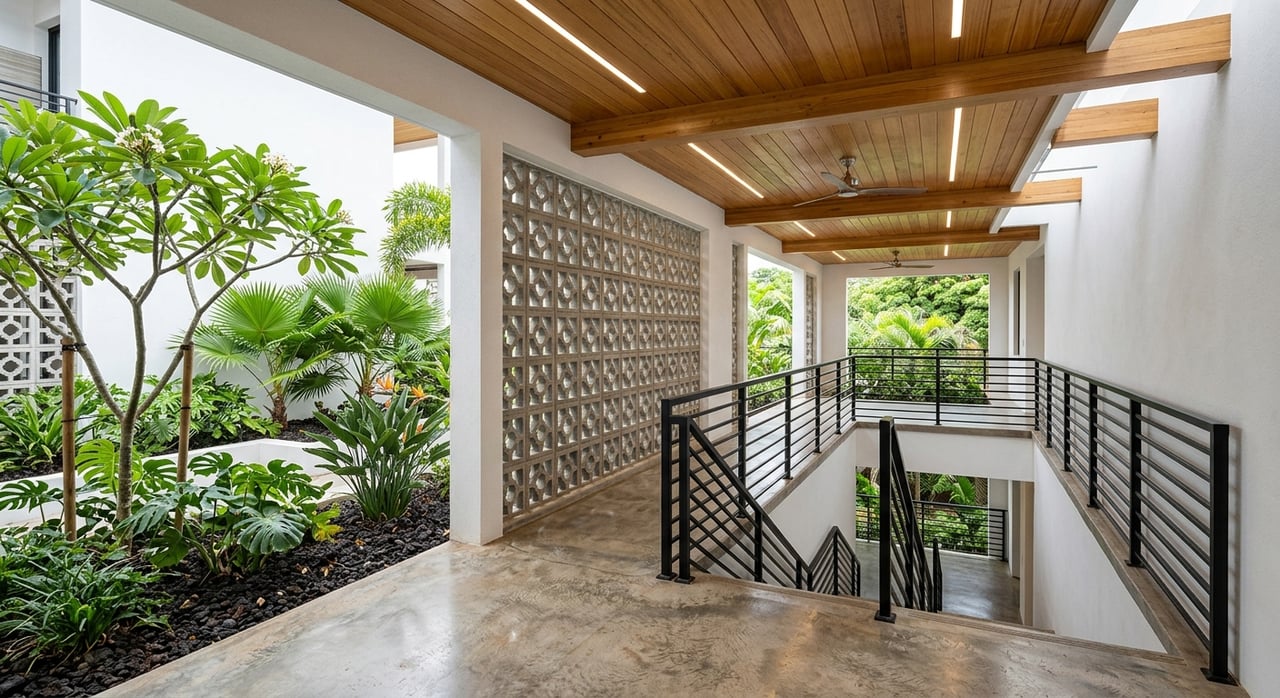
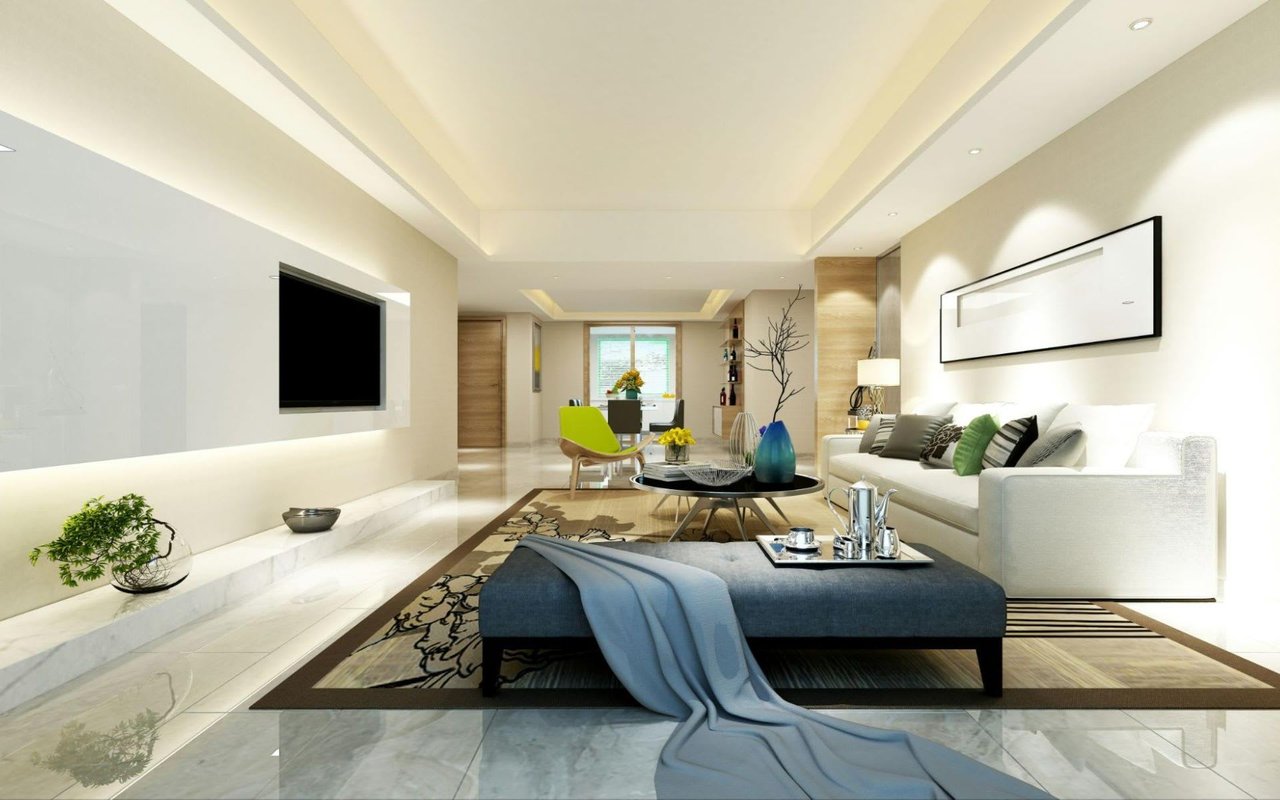
- Minimalist material palettes: Clean lines and restrained material choices characterize much of today's new construction.
- Custom architectural commissions: Many oceanfront properties now involve architects designing homes specifically around a single lot's views and conditions.
Local architecture Kona has embraced over the decades continues shifting while still drawing on the same materials and climate considerations as its earliest buildings.
FAQs
Can I visit Kona's historic landmarks before touring modern homes?
Yes, both Hulihe'e Palace and Mokuaikaua Church sit within walking distance of each other in downtown Kailua-Kona. I often recommend a short visit to both as a way to understand the area's architectural roots.
Do modern Kona homes still use traditional materials like lava rock?
Many do, often incorporating lava rock and native wood alongside more contemporary materials and building techniques. I can point out specific examples during a property tour.
What makes indoor-outdoor design so common in Kona specifically?
The island's consistently warm climate makes open, breathable layouts practical rather than purely aesthetic. This approach also directly echoes traditional Hawaiian building methods used long before modern construction techniques existed.
Contact Kris Hazard Today
Kona's architectural history adds real depth to any property search here, and I enjoy sharing these details with clients getting to know the area. Whether you're drawn to a historic-inspired property or a fully modern oceanfront home, I make sure every conversation reflects the design traditions that shape this part of the island.
Contact me, Kris Hazard, and we’ll walk you through the local architecture Kona has to offer as you explore your own property search here.
Contact me, Kris Hazard, and we’ll walk you through the local architecture Kona has to offer as you explore your own property search here.